

Freediving accessories cover everything that doesn’t fit neatly into a single gear category but matters just as much as your suit or fins. A freediving line sets your descent path and brings you back to the surface. A surface marker buoy marks your position for boats and keeps your safety team oriented. A weight belt with the right load makes the difference between fighting your buoyancy and gliding effortlessly through the water column. A diving knife sits unused on 999 dives out of 1000 — and earns its place on the one that matters.
This category covers the full range of freediving support equipment: lines, buoys, weight systems, bags, knives, lanyards, and a selection of smaller items that experienced freedivers learn to appreciate over time.
-
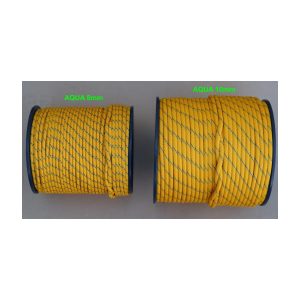
Freediving lines (4)
-
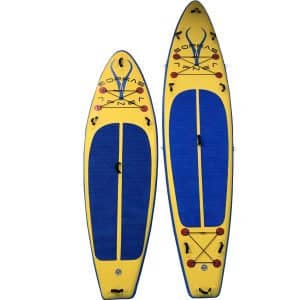
SUP boards (2)
-
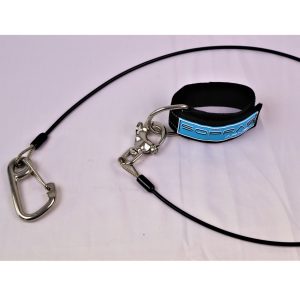
Others (6)
-
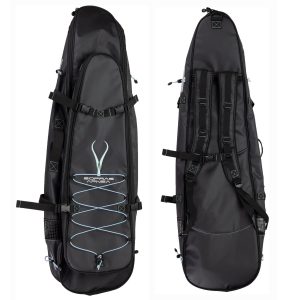
Freediving bags (11)
-
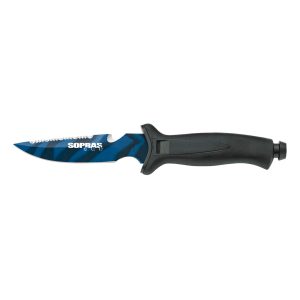
Diving knives (3)
-
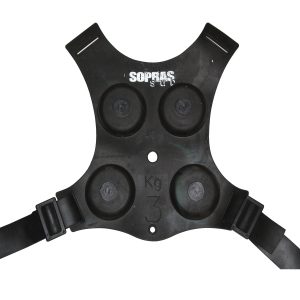
Weight belts and weights (5)
-
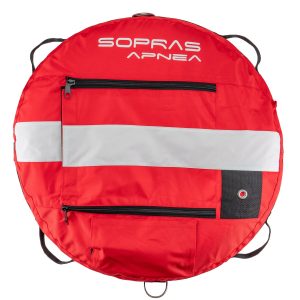
Surface marker buoys (10)
What’s in the Freediving Accessories Category
The accessories range at Sopras covers seven subcategories. Freediving lines include dedicated freediving ropes in two variants — Aqua and Vento — along with bolt snaps and a pulley system for line rigging. Surface marker buoys range from compact torpedo buoys for spearfishing to large professional buoys used by dive centres, plus inflatable surface boards and a small lift bag. Weight belts and weights covers rubber belt options with plastic and stainless steel buckles, ankle weights, and a chest weight. Freediving bags includes dedicated bags for monofins, dry bags, the Freedivers bag and DeLux variants, a trolley bag, waterproof cylinder bags, and smaller items like a net for catch and a neoprene notebook protector. Diving knives covers the APNEA knife and two Barracuda camouflage variants. Others contains freediving lanyards in three versions, a dive flag, neoprene thermo holder, and suit button replacement. SUP boards round out the category with inflatable stand-up paddle board options.
Freediving lines
Dedicated freediving ropes in two variants — Aqua and Vento — plus bolt snaps with side-opening gates and a pulley system for rigging and adjusting a weighted dive line from the surface.
Surface marker buoys
Torpedo buoys for spearfishing, full-sized freediver buoys in multiple colours, professional dive centre buoys, inflatable surface boards, and a small lift bag for object recovery.
Weight belts and weights
Rubber weight belts with plastic or stainless steel quick-release buckles, ankle weights in two load options, and a chest weight for centralised mass distribution during freefall.
Freediving bags
Dedicated monofin bags, the Freedivers bag and DeLux variants, a wheeled trolley bag for travel, dry bags and backpacks, waterproof cylinder bags, and a net bag for spearfishing catch.
Diving knives
The compact APNEA knife for standard freediving use and two Barracuda camouflage variants for spearfishing. Stainless steel blades in secure sheaths for one-handed emergency draw.
Others
Freediving lanyards in three quick-release variants, a dive flag, a neoprene thermo holder for drinks at the water’s edge, and a replacement plastic button for open-cell suit maintenance.
SUP boards
Inflatable freediving boards in small and large sizes — purpose-built platforms with grab handles, D-rings for line and pulley systems, and bungee equipment storage. Includes pump, paddle, and backpack.
The Role of Accessories in Freediving Safety
Several items in this category are not optional — they are fundamental safety equipment. A buoy and line system is the minimum requirement for open water freediving: the line gives you a reference for descent and ascent, and the buoy keeps you visible to surface traffic. Freediving organisations require a buoy for any training or record attempt in open water, and experienced freedivers use one even for casual sessions.
A freediving lanyard connects the diver to the line during competitive depth diving. The lanyards in the Others subcategory use quick-release mechanisms — a velcro release, a quick-release snap link, or a QR buckle without a 360° turret — each designed to disengage rapidly at the surface or on request. The choice between them comes down to personal preference and the type of diving: competitive depth work typically requires a certified lanyard setup, while recreational divers often prefer the simplicity of velcro.
A knife addresses entanglement risk. Monofilament fishing line, discarded nets, and kelp all present potential hazards. A diving knife must be reachable with one hand, draw cleanly from its sheath, and cut reliably through cordage and netting. The Barracuda camouflage variants also serve spearfishers who need a knife for handling catch.
Weighting and Buoyancy
Correct weighting is one of the most important technical skills in freediving. The goal is neutral buoyancy at 10–15 metres — shallow enough that the passive phase of descent begins without excessive effort, and deep enough that the diver doesn’t sink uncontrollably if something goes wrong near the surface. Getting there requires experimentation: suit thickness, water salinity, body composition, and lung volume all affect how much weight you need.
Rubber weight belts are standard for freediving because rubber stretches with the diver’s body as the suit compresses under pressure. A neoprene suit that adds significant buoyancy at the surface becomes progressively less buoyant as you descend — the rubber belt follows that change rather than riding loose on a compressed torso. Ankle weights address leg-heaviness in bi-fin divers, while a chest weight distributes mass centrally for improved hydrodynamic balance during freefall.
What to Look For
- Buoy visibility and stability. A buoy needs to be seen from a distance and stay upright in choppy conditions. Bright colours and a stable elongated shape matter more than size alone. Larger buoys are appropriate for training setups with multiple divers or rough open-water conditions.
- Belt buckle reliability. The buckle must release instantly with one hand in an emergency but hold securely under normal conditions. Stainless steel buckles resist corrosion and maintain smooth operation in saltwater over time. Check and rinse buckles after every saltwater session.
- Knife accessibility. A knife you can’t reach quickly has no safety value. Test your carry position on land: reach across your body, use your non-dominant hand, reach with gloves on. Sheath retention should be firm but not require two hands or extra attention to release.
- Bag durability and drainage. Freediving bags get wet, sandy, and heavily loaded. Look for reinforced handles and zips, drainage ports or mesh panels that allow wet gear to air out, and materials that resist UV and salt degradation.
- Line diameter and material. Freediving lines need to be low-stretch, visible underwater, and smooth enough not to injure hands on a fast ascent. Dedicated freediving lines are designed specifically for this — not all rope is suitable.
Maintenance and Care
Rinse all metal hardware — buckles, bolt snaps, knife sheaths, pulley wheels — with fresh water after every saltwater dive. Salt crystallises in moving parts and causes corrosion and seizing over time. For stainless steel components, a light application of silicone spray after drying extends service life significantly.
Knife blades require occasional sharpening and should be dried completely before storage to prevent oxidation, even on stainless steel. Store knives out of their sheaths if storing long-term, as trapped moisture accelerates corrosion.
Rubber weight belts should be rinsed and dried away from direct sunlight. UV exposure and ozone degrade rubber over time, causing cracking and reduced elasticity. A belt that has lost significant stretch may no longer follow suit compression at depth — replace it rather than risk a loose fit.
Dry bags and waterproof bags should be rinsed inside and out, then left open to dry thoroughly before storage. Roll-top closures can develop mould at the fold if stored damp. Zip-closure bags benefit from occasional application of zip lubricant to maintain the waterproof seal.
Freediving lines should be rinsed and dried loosely coiled — avoid tight coils that hold moisture in the centre. Inspect the line regularly for fraying, particularly at attachment points where movement and abrasion concentrate wear.
FAQ
Do I need a buoy for recreational freediving?
In open water, yes — a buoy and line should be considered mandatory equipment rather than optional. Without a buoy, you are invisible to passing boats and your safety partner has no fixed reference point on the surface. In supervised pool environments a buoy is not required, but for any sea or lake diving it is a fundamental safety item.
How much weight do I need?
There is no universal answer — it depends on your suit thickness, body composition, water salinity, and how much air you typically hold at the start of a dive. A common starting point for a 5 mm two-piece suit in seawater is 6–10% of body weight, then adjust from there through in-water testing. The target is neutral buoyancy at 10–15 metres.
What’s the difference between the Aqua and Vento freediving lines?
Both are dedicated freediving lines, but they differ in construction and handling feel. The Aqua is designed for general use, while the Vento has different stretch and surface characteristics. Check the individual product pages for current specifications.
Which lanyard type should I choose?
For recreational depth diving, the velcro release lanyard is the simplest option and releases reliably in most situations. The quick-release snap link version is preferred by competitive freedivers and those training at greater depths, where a mechanical release is more reliable under load. The QR buckle without 360° turret is a middle-ground option with a more compact profile.
Can I use a standard diving knife for freediving?
Yes, but a knife designed specifically for freediving or spearfishing will typically be lighter, have a lower-profile sheath, and mount more securely for one-handed draw. Standard scuba knives tend to be bulkier and heavier than necessary for freediving use.