

Showing all 5 results
Correct weighting is one of the most consequential variables in freediving. Too little weight and you fight your buoyancy through the shallow water where you’re most positively buoyant; too much and the passive phase of descent starts too early or your surface recovery becomes effortful. A rubber weight belt with the right load, distributed appropriately across belt and body, is the foundation of efficient and safe diving.
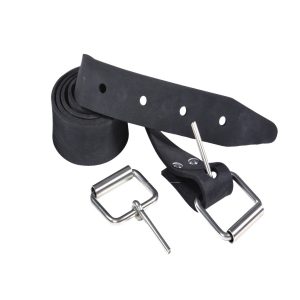
Why Freediving Uses Rubber Belts
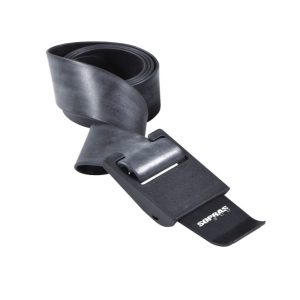
Rubber is the standard material for freediving weight belts for one specific reason: it stretches. A freediving suit compresses as you descend — a 5 mm neoprene jacket that fits snugly at the surface may lose 30–40% of its volume by 20 metres. A standard textile or nylon belt does not adapt to this change and can ride loose on the torso, shifting weight distribution and, in a worst case, sliding off entirely. A rubber belt follows the compression of the suit, maintaining its position and load distribution throughout the dive.
The two belts available here differ only in buckle material. The rubber belt with plastic buckle is lighter and adequate for pool diving and freshwater use where corrosion is not a concern. The rubber belt with stainless steel buckle is the correct choice for regular saltwater diving — plastic buckles can become brittle and crack under sustained UV and saltwater exposure, while stainless steel maintains its mechanical properties and releases reliably throughout the belt’s life.
Both buckles use the standard freediving quick-release mechanism: a single motion that drops the belt in an emergency. The ability to ditch weight rapidly is a core safety principle in freediving, and the buckle design reflects this.
Distributed Weighting: Ankle and Chest Weights
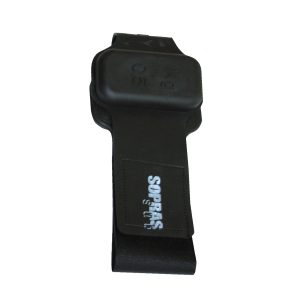
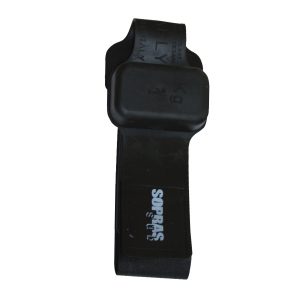
Ankle weights address a specific problem: leg heaviness. Some freedivers — particularly those using bi-fins — find that their legs sink during the horizontal glide phase, requiring constant muscular effort to maintain a streamlined body position. Adding weight at the ankle resolves this without increasing belt load, which would affect the descent buoyancy profile. Two weight options are available to suit different degrees of correction needed.
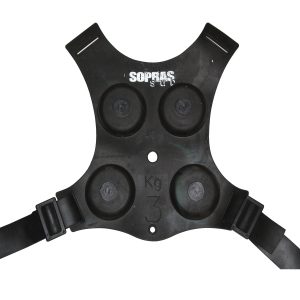
The chest weight serves a different purpose. Placing weight on the chest rather than the waist positions the load close to the centre of buoyancy, which can improve hydrodynamic balance and reduce the tendency to rotate head-up or head-down during freefall. Some competitive freedivers and spearfishers prefer to keep belt weight minimal and use a chest weight to make up the difference — it distributes mass differently and can feel more stable during a streamlined descent.
How Much Weight Do You Need
The standard target is neutral buoyancy at 10–15 metres. At that depth, a diver should neither float upward nor sink without effort — the passive descent phase should begin naturally. In saltwater with a standard 5 mm open-cell two-piece suit, a starting estimate of 6–8% of body weight is commonly used. Adjust in 0.5–1 kg increments per session until the neutral point is correct. Changes in suit thickness, water salinity, or body weight all require retesting. There is no shortcut to getting this right other than methodical in-water adjustment.
What to Look For
- Buckle material matched to your diving environment. Stainless steel for saltwater, plastic acceptable for pool and freshwater. Both use the same quick-release mechanism, but stainless holds up significantly better in marine environments over time.
- Belt length and adjustment range. A rubber belt needs to sit snugly at the surface and stay in position at depth as the suit compresses. Check that the belt length allows fitting correctly over a wetsuit — too short and you cannot buckle it comfortably; too long and the excess rubber bunches and shifts.
- Ankle weight closure system. Ankle weights must stay in position throughout a dive and must be removable quickly if needed. Velcro-based closures are standard — check that the velcro surface area is large enough to hold reliably under movement.
- Weight distribution across the belt. Where individual lead weights are threaded onto the belt, centralising most of the weight at the back reduces interference with breathing mechanics during the breathe-up phase before diving.
Maintenance and Care
Rinse rubber belts with fresh water after every saltwater session and dry away from direct sunlight. UV and ozone degrade natural and synthetic rubber, causing surface cracking and loss of elasticity. A belt that has lost significant stretch should be replaced — it will not maintain correct tension at depth.
Clean buckles thoroughly after saltwater use. Salt crystals in the release mechanism cause it to stick or operate stiffly. For stainless steel buckles, a rinse and dry is usually sufficient; a small application of silicone spray after drying maintains smooth operation.
Rinse ankle weights and the chest weight, paying attention to the velcro closure surfaces on ankle weights. Salt and sand embedded in velcro loops reduces grip significantly over time. A soft brush and fresh water clears debris from both hook and loop surfaces.
FAQ
Why is a quick-release buckle required in freediving?
In an emergency, removing weight quickly can make the difference between a diver reaching the surface with minimal assistance and requiring a full rescue. A quick-release buckle allows the entire belt to be dropped with a single movement, removing the most significant source of negative buoyancy instantly. This is why textile belts with multi-step buckles are not appropriate for freediving.
Can I use a scuba weight belt for freediving?
A scuba weight belt will function, but rubber belts designed specifically for freediving are preferable. Scuba belts are typically textile and do not stretch with suit compression. If you already have a scuba belt, it is adequate for initial testing and shallow diving, but for regular freediving a rubber belt is worth the upgrade.
When do I need ankle weights?
If you find yourself constantly fighting to keep your legs horizontal during the glide and recovery phases of a dive, ankle weights are the correct solution. They are more common among bi-fin divers than monofin divers. Start with the lighter option per ankle and assess the change in body position before adding more.
How is the chest weight worn?
The chest weight uses a harness or vest-style attachment that distributes the load across the chest and shoulders. It is worn under or over the wetsuit depending on the design, and adjusted to sit centrally and symmetrically. The weight should not shift during movement — if it moves during a streamlined position, the fit needs adjustment.
Do I need to retest my weighting if I change suits?
Yes, always. Suit thickness and neoprene grade both affect buoyancy significantly. A change from a 3 mm to a 5 mm suit can add several kilograms of positive buoyancy that must be compensated. Treat any suit change as a fresh weighting exercise.