

Showing all 4 results
A freediving line is the central axis of any open-water freediving session. It defines your descent path, gives you a tactile reference during the passive phase of freefall, and provides an immediate route back to the surface if anything goes wrong. The hardware connecting the line to your buoy and bottom weight — bolt snaps and a pulley system — determines how quickly and reliably you can set up and adjust the rig in real conditions.
Why the Line Matters in Freediving
Unlike scuba diving, where you navigate freely, freediving — particularly constant weight and free immersion disciplines — centres on a vertical line. The line serves as a reference for body position: a diver in proper streamline should barely touch it. During freefall, the passive descent phase that begins when the body becomes negatively buoyant, the line is the only external indicator of vertical orientation. On ascent, it guides the diver back to the surface at the correct angle and pace.
In rescue scenarios, the line is what the safety diver follows to reach a blacked-out freediver at depth. A taut, well-weighted line that runs straight from buoy to bottom plate is not an optional refinement — it is a functional safety requirement.
Line Construction and What It Means in Practice
Dedicated freediving lines differ from general-purpose rope in several important ways. Low stretch is critical: a line that stretches significantly under load gives a false sense of depth and makes accurate bottom-plate positioning difficult. Smooth surface texture matters because a diver ascending quickly along a line under hypoxic conditions may grip it hard — rough rope can cause friction burns through gloves or bare hands. High visibility in the relevant water conditions affects both the diver’s ability to track the line and the safety diver’s ability to orient on it quickly.
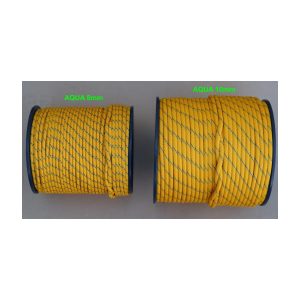
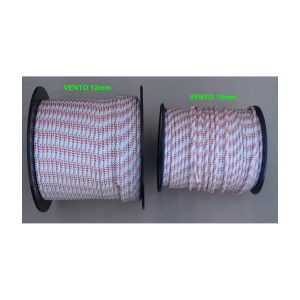
The Freediving Line Aqua and Freediving Line Vento are both purpose-built for vertical freediving use. They differ in construction and handling feel — the Aqua is a standard all-round choice, while the Vento offers different characteristics suited to specific preferences or conditions.
Hardware: Bolt Snaps and Pulley System
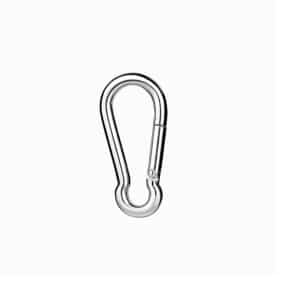
The Bolt snap with side opening is the standard connector for attaching a freediving line to a buoy ring, bottom plate, or weight. The side-opening gate allows the snap to be clipped and unclipped with one hand even with gloves on — the standard top-opening snap requires two-handed operation that can be difficult in cold water. Available in two sizes to suit different line diameters and hardware setups.
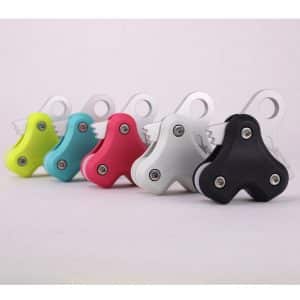
The Pulley system is used to rig and tension a freediving line from a buoy. It allows the bottom weight to be raised or lowered without pulling the full weight of the line, and helps maintain consistent line tension as conditions change — particularly useful for training setups where the target depth changes between dives, or for two-diver systems where one diver adjusts the line while the other recovers on the surface.
What to Look For
- Line length for your target depth. Buy line with margin — a 30-metre line for 25-metre dives leaves little room for error if the buoy drifts or the bottom weight settles unevenly. A 10–20% safety margin is standard practice.
- Smooth surface and low stretch. These two properties matter more than raw strength. A freediving line will never be loaded to breaking — what it needs to do is run straight, run true, and not injure a diver who grips it under stress.
- Side-opening bolt snaps for all connections. Any hardware that connects line to buoy or bottom plate should be operable with one gloved hand. Side-opening gates are significantly easier to manage in cold or stressful conditions than standard top-opening snaps.
- Pulley system for training setups. If you dive regularly at varying depths with a fixed line rig, a pulley system dramatically simplifies logistics. Without it, adjusting depth means pulling up and re-weighting the bottom plate manually.
Maintenance and Care
Rinse the line with fresh water after every saltwater session and allow it to dry loosely — avoid tight coils that trap moisture at the centre of the rope. Store away from direct UV exposure, which degrades rope fibres over time regardless of material.
Inspect the full length of the line periodically for abrasion damage, particularly near attachment points where the rope runs through rings or over edges. A weakened section near the bottom plate or buoy ring can fail under the dynamic load of a rapid buoy dip in waves.
Clean bolt snaps and pulley wheels with fresh water, then dry and apply a small amount of silicone lubricant to the gate spring and wheel axle. Salt crystals in a bolt snap gate cause it to stick — the last thing you want when clipping off under pressure or detaching the line in an emergency.
FAQ
Can I use any rope as a freediving line?
Technically yes, but in practice the differences matter. General-purpose rope often has significant stretch, rough surface texture, and poor visibility in water. Dedicated freediving lines are engineered to run straight under tension, feel smooth against bare skin and gloves, and maintain consistent handling across temperature changes. For deeper or more serious diving, purpose-built line is worth the difference in cost.
What weight should I use on the bottom plate?
The bottom weight needs to be heavy enough to keep the line taut and vertical even when the buoy moves in waves or current. A common starting point is 1–2 kg in calm conditions, increasing to 3–5 kg in stronger current or significant surface chop. If the line deviates from vertical by more than a few degrees, add weight.
What’s the difference between the Aqua and Vento lines?
Both are dedicated freediving lines engineered for vertical use. They differ in braid construction and the resulting stiffness and surface feel. Both perform to the same functional standard — the difference is a matter of preference once you have experience with both.
Do I need a pulley system for recreational freediving?
Not necessarily. If you dive at a consistent depth and set up your line once per session, a pulley adds complexity without much benefit. Where it becomes genuinely useful is in training setups where target depth changes between dives, or when diving from a boat where pulling up the full bottom weight manually is awkward. For dive centres and coaches running multiple divers, it’s close to essential.
Why does the bolt snap have a side-opening gate?
Side-opening gates can be operated with one hand and are significantly easier to manage with gloves on or in cold water. Standard top-opening snaps require a specific thumb movement that becomes unreliable when your hands are cold or you’re working quickly under pressure. For any safety-critical connection in diving, one-handed operability is the correct design criterion.