

Showing 1–12 of 18 results
Fins are the primary propulsion system in freediving — the component that determines how efficiently you convert kick effort into forward movement, and how much of your breath-hold you spend getting to depth versus actually being there. The range here spans from entry-level rubber fins to high-performance carbon blade systems, with fiberglass and composite options in between. Choosing the right fin means matching blade material, stiffness, and foot pocket design to your body, technique, and the type of diving you do.
Blade Materials and What They Mean in Practice
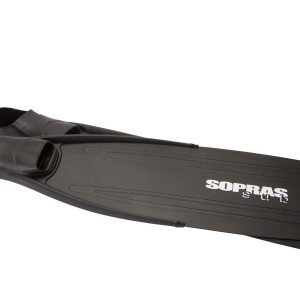
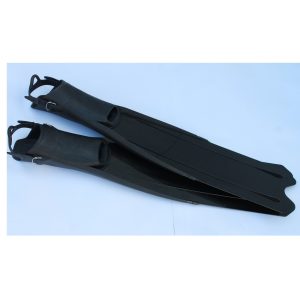
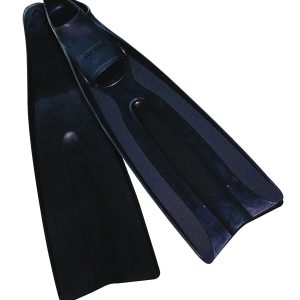
Rubber fins are the entry point. The Rubber full foot fins and Lunga stealth use full rubber construction — durable, forgiving, and tolerant of technique errors that would snap a stiffer blade. Rubber blades require more effort per kick than composite materials but are significantly cheaper and virtually indestructible. They suit beginners, casual snorkellers, and spearfishers who prioritise durability over performance.
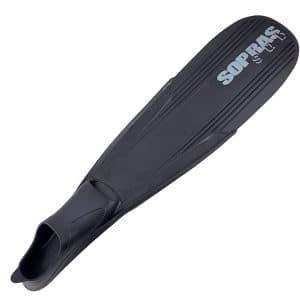
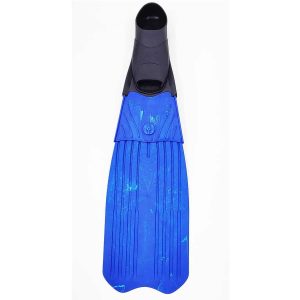
Plastic blade fins sit between rubber and composite in terms of performance and cost. The X-Race series — available in black, green, and multiple colour variants — uses a plastic blade with a channelled design that improves water flow across the blade surface. Two stiffness variants are available: the standard X-Race and the X-Race more flexible versions (black, pink, red, white). Softer blades suit divers with less leg strength or those who prefer a higher kick cadence; stiffer blades reward stronger, slower kicks with more forward drive per stroke. The Long fins with strap are an open-heel design with a longer blade for additional reach — suited to spearfishing and training use where a strap system is preferred over a fixed foot pocket.
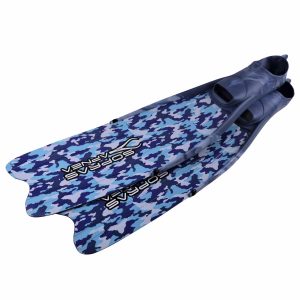
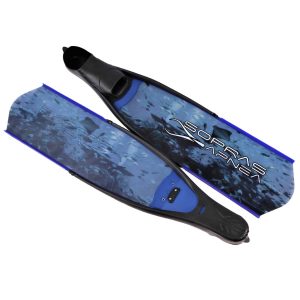
Fiberglass fins represent the mid-to-high performance tier. The HF 200 camo uses a fiberglass blade bonded to foot pockets — lighter and more responsive than plastic, with a more natural flex pattern that closely follows the foot’s kick motion. Fiberglass transmits force efficiently without the weight penalty of carbon, and is significantly more impact-resistant than carbon on rocky reefs or boat gunwales.
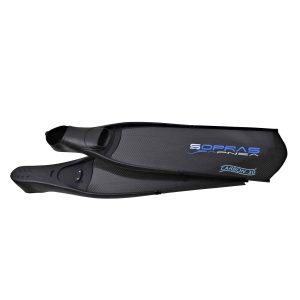
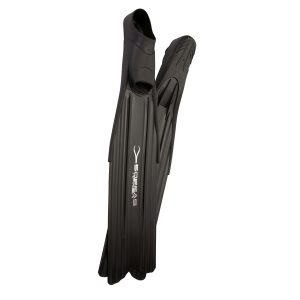
Carbon fiber fins are the highest-performance option in the range. The HF 300 carbon fiber and Carbon Fins detach use full carbon blade construction — the lightest and most efficient blade material available, with flex characteristics that experienced freedivers specifically tune their technique to exploit. Carbon blades are fragile relative to other materials and require careful handling, particularly on rocky entries and exits. The Carbon Fins detach system allows the blade to be removed from the foot pocket for transport and storage — a significant practical advantage for travel, as carbon blades that cannot be separated from the foot pocket are difficult to pack safely.
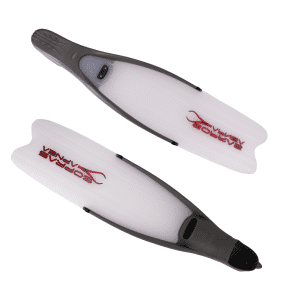
The HF 100 series (black, camou, clear) occupies the entry-to-mid composite tier — a step up from rubber and plastic in performance, using a thermoformed blade with better flex characteristics than standard plastic at an accessible price point.
Bi-fins vs. Monofin
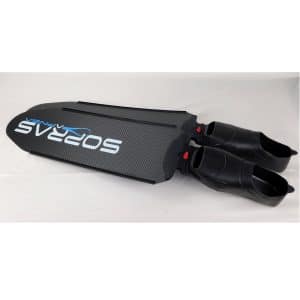
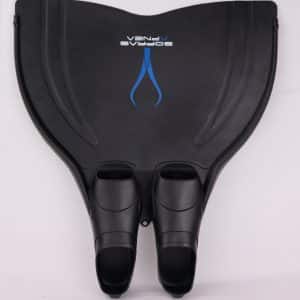
All fins in this category except one are bi-fins — a pair of separate fins, one per foot, using the standard alternating kick technique. The Monofin is a single blade connecting both feet, used with the dolphin kick technique where both legs move together in a fluid undulation. Monofins are the fastest propulsion system in freediving and are used in competitive pool disciplines (dynamic apnea) and by some depth freedivers. They require dedicated technique training to use effectively — the dolphin kick is not intuitive for divers who have only ever used bi-fins. The monofin here is a solid entry-to-mid level competition option, not a beginner tool.
Foot Pockets and Fit
A fin that fits poorly performs poorly regardless of blade quality. Freediving foot pockets are designed as closed heel systems — the foot is fully enclosed, which keeps the fin secure during powerful kicks and prevents the fin from shifting position during a streamlined descent. The fit should be snug without restricting blood circulation: a pocket that is too tight causes numbness and cramp at depth; one that is too loose causes blisters and reduces blade efficiency as the foot moves within the pocket.
Most fins are worn over 3 mm neoprene socks (available in the Gloves & socks category) rather than barefoot. Always size foot pockets with the socks you intend to wear — sizing barefoot for a fin you will always use with socks produces a fit that is too tight.
The detachable blade systems — X-Race detachable and Carbon Fins detach — allow the blade to be separated from the foot pocket. This enables mixing foot pocket sizes with different blade options, replacing only the blade if damaged without replacing the foot pocket, and significantly easier packing for air travel.
Choosing the Right Stiffness
Blade stiffness is the most technically consequential variable in fin selection after material. A blade that is too stiff for a diver’s leg strength produces short, choppy, inefficient kicks; a blade that is too soft flexes excessively and wastes energy in blade deformation rather than water displacement. The correct stiffness is the one that allows a full, powerful kick cycle with the blade returning fully to neutral between strokes.
As a general guide: divers with less leg strength, beginners, and those who prefer higher kick cadence should start with softer blades — the X-Race more flexible variants or the HF 100 series. Divers with strong legs and developed technique benefit from the HF 200, HF 300, or Carbon Fins detach. When in doubt, err softer: an overly soft blade is merely inefficient; an overly stiff blade actively degrades technique and can cause knee and hip strain over long sessions.
What to Look For
- Blade material matched to budget and use case. Rubber for beginners and durability-first applications; plastic and HF 100 for recreational all-round use; fiberglass for the step up to performance; carbon for experienced divers who have refined their kick technique and want maximum efficiency.
- Stiffness matched to leg strength. Test if possible before buying — fin stiffness that feels appropriate standing on land is often too stiff in the water where the full stroke is loaded. When buying without testing, choose softer rather than stiffer for a first fin in a new material.
- Foot pocket fit with neoprene socks. Size foot pockets with the socks you intend to dive with. If you dive in cold water with 3 mm socks, size for that combination specifically.
- Detachable blades for travel. Carbon and composite blades are difficult to pack safely in standard luggage. Detachable blade systems allow the blade and foot pocket to be packed separately, reducing breakage risk and luggage volume significantly.
- Monofin only with technique training. The monofin is a high-efficiency tool but requires dedicated dolphin kick practice to use effectively. Divers without prior monofin experience should plan on structured training sessions before using it for open-water diving.
Maintenance and Care
Rinse fins thoroughly with fresh water after every saltwater session, paying attention to the foot pocket interior and the blade-to-pocket junction where salt tends to accumulate. Allow to dry fully before storage.
Store fins flat or hanging vertically — never store fins rolled, folded, or under weight. Sustained deformation causes permanent blade warping, particularly in composite and carbon blades. A warped blade tracks off-centre and cannot be corrected.
Carbon blades require careful handling around hard surfaces. Contact with rock, boat gunwales, or concrete pool edges causes delamination and cracking that is visible as white stress marks in the blade surface. Inspect carbon blades before every session — a delaminating blade can fail under load at depth. Transport carbon fins in a dedicated fin bag or the Carbon Fins detach bag to prevent this.
Fiberglass blades are more impact-resistant than carbon but should still be inspected for stress cracks, particularly at the blade-to-foot-pocket junction where flex loads concentrate. A crack at this point grows rapidly under use and will eventually cause the blade to separate.
For detachable blade systems, inspect the blade locking mechanism periodically. Salt in the locking hardware causes it to stiffen or corrode — rinse thoroughly and apply a small amount of silicone lubricant to maintain smooth operation.
Rubber foot pockets should be rinsed and dried away from direct UV exposure. Prolonged UV and ozone exposure degrades rubber, causing surface cracking and reduced elasticity in the foot pocket material over time.
FAQ
What’s the difference between the X-Race standard and X-Race more flexible?
Both use the same plastic blade design and foot pocket system. The standard X-Race has a stiffer blade suited to stronger kickers who want more drive per stroke; the more flexible variant has a softer blade that is more forgiving of technique inconsistencies and suits divers with less leg strength or those who prefer a faster, lighter kick style. The more flexible version is the better starting point if you are unsure which suits you.
Are carbon fins worth the extra cost?
For experienced freedivers with developed kick technique, yes — carbon blades are noticeably more efficient than fiberglass or plastic, and the difference is felt in reduced effort per metre of depth and extended breath-hold endurance over a session. For beginners or divers with inconsistent technique, the difference is less pronounced and the fragility of carbon is a real practical concern. Most instructors recommend developing technique on fiberglass or good-quality plastic fins before investing in carbon.
Should I size foot pockets with or without socks?
Always size with the socks you will actually dive with. For most open-water freediving this means 3 mm neoprene socks. A foot pocket sized for bare feet will be painfully tight over socks; one sized correctly for socks will be slightly loose barefoot but still functional. If you regularly dive both with and without socks, size for the sock combination and manage the barefoot case with a thinner sock.
Can I use the monofin for open-water freediving?
Yes, monofins are used for open-water depth freediving — the dolphin kick is efficient for vertical descent and ascent. The practical considerations are entry and exit (a monofin makes climbing ladder-style exits difficult and rocky entries awkward), and the fact that the dolphin kick requires both legs to move together, which limits manoeuvrability on reef or in current. Most open-water monofin use is in calm, clear-water conditions with a fixed vertical line.
What is the short blade for X-RACE detach used for?
The short blade is an alternative blade option for the X-Race detachable foot pocket system. A shorter blade is more manoeuvrable in confined spaces — cave diving, rocky reef, kelp — where a full-length blade creates handling problems. It is also used for pool training sessions where a compact kick is preferred over maximum range. The detachable system allows the same foot pocket to be used with either blade, switching based on the dive environment.