

Showing all 7 results
A freediving snorkel is used on the surface between dives — during the breathe-up before a dive and the recovery after it. It is not used underwater. This narrow function shapes everything about what a freediving snorkel needs to be: low breathing resistance, comfortable mouthpiece, simple construction with no valves or mechanisms to fail, and a flexible tube section that keeps it out of the way during the dive itself.
What Makes a Freediving Snorkel Different
Scuba and snorkelling snorkels are often fitted with purge valves, dry-top mechanisms, and corrugated tubes intended to prevent water entry. For freediving, these features are unnecessary and potentially counterproductive. A dry-top valve that closes when submerged creates additional breathing resistance on the surface — the opposite of what a freediver needs during a breathe-up when airflow efficiency matters most. A purge valve at the mouthpiece adds a failure point and traps water if it leaks. Most experienced freedivers use a simple, valveless snorkel: a tube, a mouthpiece, and nothing else.
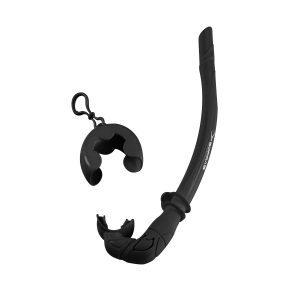
The freediving snorkels here are designed around this principle. The range spans from basic straight-tube models to slightly more refined options with ergonomic shaping and silicone mouthpieces, but none of them use complex valve systems that would add resistance or failure risk.
The Snorkels in This Range
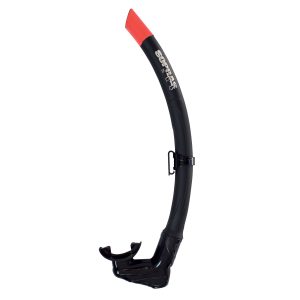
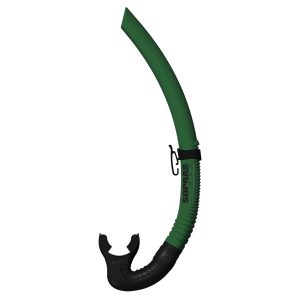
The Freediver I is the entry-level option — a simple, lightweight snorkel available in green and red. Minimal construction, soft mouthpiece, and a flexible lower section. The correct choice for a diver who needs a functional snorkel without additional features.
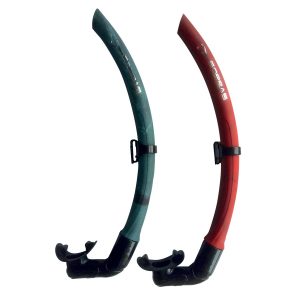
The Freediver II in green and red is a step up in mouthpiece comfort and tube shaping. The silicone mouthpiece is softer and more anatomically shaped than the Freediver I, reducing jaw fatigue on long surface sessions. The flexible lower tube section allows the mouthpiece to hang away from the face naturally when the snorkel is not in use — a detail that matters over a full session of repeated dives.
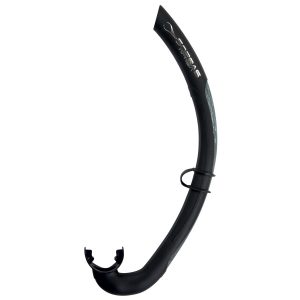
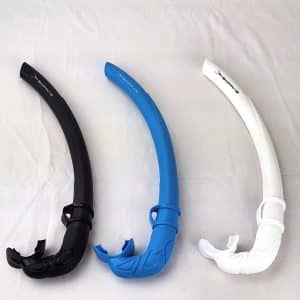
The Maestrale is available in multiple colour variants (black, blue, green, pink, white) and offers a clean, ergonomic profile suited to divers who want a well-fitting snorkel that matches their gear colour scheme. The tube diameter and length are optimised for freediving use — wide enough for efficient breathing, short enough to minimise dead space.
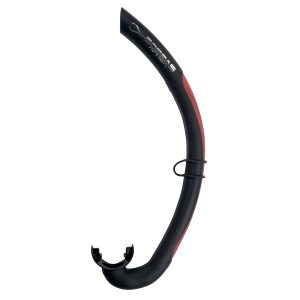
The FONDO and TIFONE are classic straight-tube snorkels from the Sopras range. The FONDO has a J-shaped profile that positions the tube close to the head; the TIFONE is available in multiple colour variants with a flexible lower section. Both are reliable, simple snorkels with no moving parts.
The Scirocco in black, white, and blue is a compact, low-profile snorkel suited to divers who prefer minimal equipment presence. Its shorter tube reduces breathing resistance and keeps the snorkel close to the head during surface swimming.
Tube Diameter, Length, and Dead Space
These three parameters determine how efficiently a snorkel allows gas exchange during the breathe-up. Tube diameter affects resistance: too narrow and each breath requires more effort; too wide and the volume of air in the tube (dead space) increases, meaning some of each inhale is re-breathing the air left in the tube from the previous exhale rather than drawing fresh air from outside. Tube length directly affects dead space volume — a longer tube holds more dead air. Freediving snorkels are designed with shorter, wider tubes than snorkelling models specifically to minimise these effects.
A practical consequence: a snorkel that feels comfortable for casual snorkelling at the surface may be suboptimal for the specific breathing demands of a freediving breathe-up, where maximising each breath’s efficiency matters. The snorkels in this range are dimensioned for freediving use rather than general snorkelling.
What to Look For
- Simple construction without valves. A valveless, straight-tube snorkel is the correct tool for freediving. Purge valves and dry-top mechanisms add resistance and failure points without providing any benefit for a diver who removes the snorkel before submerging.
- Silicone mouthpiece. Silicone is softer, more flexible, and more durable than hard plastic. A mouthpiece that causes jaw fatigue or soreness within a session will distract from the dive and make the breathe-up less effective. Silicone mouthpieces are standard across the mid-range and above.
- Flexible lower tube section. A flexible section between the tube and mouthpiece allows the snorkel to hang naturally out of the way when not in active use, and accommodates different head positions during the breathe-up without the tube pulling on the mask strap.
- Mask attachment compatibility. All snorkels here use a standard snorkel keeper clip that attaches to the mask strap. Check that the keeper is included and that it fits your specific mask strap width — most are universal, but verify before diving.
Maintenance and Care
Rinse snorkels with fresh water after every saltwater session, running water through the tube as well as over the exterior. Salt inside the tube dries into crystals that reduce airflow over time and eventually cause surface degradation of the tube material.
Remove the mouthpiece from the tube periodically for thorough cleaning — mould and bacteria accumulate at the junction between tube and mouthpiece, particularly if the snorkel is stored damp. A diluted mild detergent rinse, followed by thorough rinsing with fresh water, keeps this junction clean.
Store snorkels in a mask bag or loose in a dive bag — avoid storing them bent at sharp angles, as the tube material takes a permanent set over time if stored in a compressed position. A snorkel with a permanent kink in the tube has reduced airflow and is uncomfortable to use.
Inspect the mouthpiece for bite marks and tearing periodically. Silicone mouthpieces last significantly longer than hard plastic but do eventually show surface wear at the bite points. A torn mouthpiece that allows water ingress should be replaced rather than used — water in the mouthpiece disrupts the breathe-up and is a distraction during a safety-critical phase of the dive.
FAQ
Do I need a snorkel for freediving?
For open-water freediving, a snorkel is standard equipment. It allows you to breathe at the surface while your face is in the water during the breathe-up, keeping you oriented on your buoy and line without lifting your head. In pool training, a snorkel is less commonly used — divers typically breathe with their heads clear of the water between pool lengths. For spearfishing, a snorkel is essential for scanning the bottom while surface-swimming between hunting spots.
Why don’t freediving snorkels have a dry-top valve?
A dry-top valve closes the tube opening when submerged, preventing water entry. For recreational snorkelling this is convenient. For freediving it creates a resistance problem: the valve mechanism adds breathing resistance even when open, which accumulates over a breathe-up of several minutes. Freedivers remove the snorkel before submerging anyway, so water entry prevention is irrelevant — the valve only adds resistance with no compensating benefit.
Which snorkel is best for beginners?
The Freediver II is a good starting point — the silicone mouthpiece and flexible lower section make it comfortable for extended surface use, and the simple construction gives nothing to go wrong. The Maestrale is a similarly solid choice with more colour options. Avoid the most basic models if you plan to do regular sessions; the mouthpiece comfort difference becomes apparent quickly.
How do I attach the snorkel to my mask?
All snorkels in this range use a standard snorkel keeper — a clip that loops around the mask strap and holds the snorkel tube in position on the left side of the mask. Thread the mask strap through the keeper slot and position the snorkel so the mouthpiece sits comfortably without the tube pulling on the strap. The correct position keeps the tube close to the head to minimise drag during surface swimming.
Is a longer snorkel better?
No — for freediving, a shorter snorkel is generally preferable. A longer tube holds more dead-space air, meaning each inhale re-breathes a larger volume of air from the previous exhale before drawing fresh air from outside. This reduces the efficiency of the breathe-up. The snorkels here are sized appropriately for freediving use; choosing the longest available model provides no benefit and slightly reduces breathe-up quality.