

Showing all 12 results
The exterior surface of a freediving wetsuit affects drag, wind resistance, durability, and how the suit behaves out of the water. Smooth skin, glide skin, and mesh skin are three distinct exterior treatments — each built for a different balance of performance, practicality, and longevity. Understanding what separates them makes the choice straightforward.
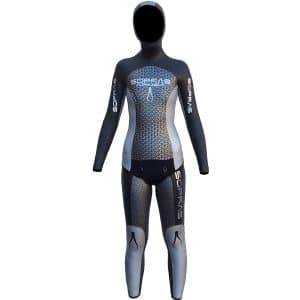
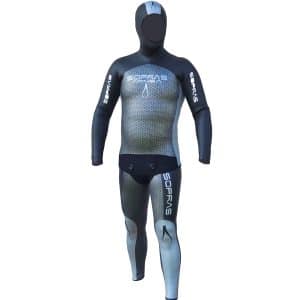
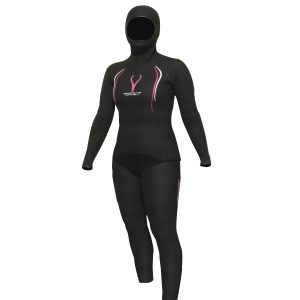
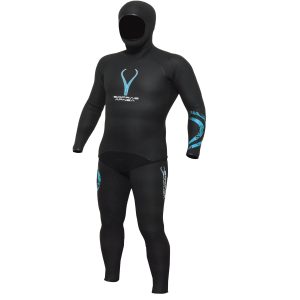
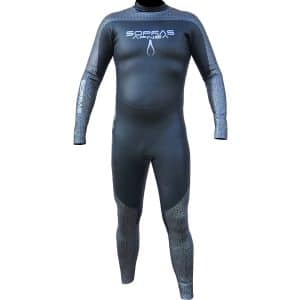
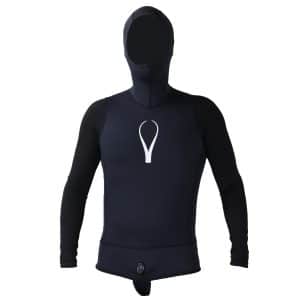
Exterior Surface: Why It Matters for Freediving
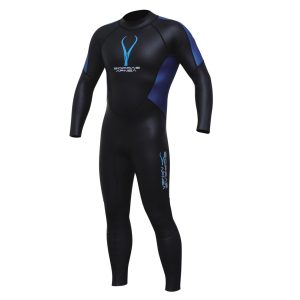
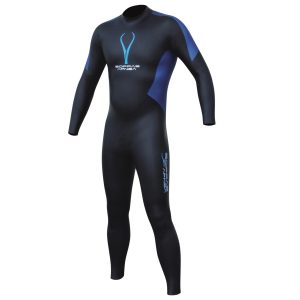
All freediving wetsuits share the same basic structure — neoprene with an open cell or lined interior. Where they diverge is the exterior surface, which determines three things that matter directly to performance: hydrodynamic drag in the water, wind resistance at the surface, and durability against abrasion and tearing. The three main exterior treatments used in freediving wetsuits each optimise this balance differently, and the right choice depends on how and where you dive.
Smooth Skin: Maximum Glide, Minimum Tolerance for Abuse
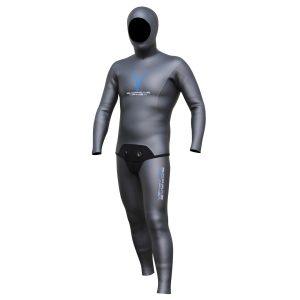
Smooth skin (also called smoothskin or slickskin) leaves the rubber surface of the neoprene fully exposed on the exterior, without any fabric covering. The result is a hydrophobic surface that sheds water rather than absorbing it, creating minimal drag as the diver moves through the water. At the surface, the same property prevents evaporative cooling — the suit does not hold water in a fabric layer, so wind chill between dives is significantly reduced compared to lined exteriors.
The performance advantage comes with a significant durability trade-off. Exposed rubber tears easily on contact with rough surfaces — boat ladders, rocks, fingernails, and even aggressive handling when donning and doffing. Smooth skin suits require careful management at all times and are not appropriate for diving environments where contact with abrasive surfaces is likely. They are the preferred choice for pool training and competition, where conditions are controlled and drag reduction has a measurable effect on performance.
Glide Skin: The Practical Performance Compromise
Glide skin applies a processed, slightly textured treatment to the neoprene exterior — often described as a metallic or SCS (Super Composite Skin) coating — that retains most of the hydrodynamic properties of smooth skin while offering somewhat better resistance to minor abrasion. The surface still repels water effectively and provides good wind protection, but tolerates handling slightly better than fully exposed smooth rubber.
Glide skin suits suit freedivers who want the performance characteristics of smooth skin for regular open-water training but need something marginally more robust than a pure competition suit. The difference in drag compared to smooth skin is minimal in practical freediving; the difference in durability is meaningful over a full training season.
Mesh Skin: Durability Without Sacrificing Exterior Performance
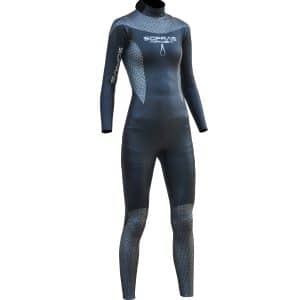
Mesh skin uses a rubberised exterior with a fine knurled or diamond-pattern texture — a machined surface that increases resistance to cuts and abrasions while retaining the water-shedding properties of an unlined exterior. It is significantly more resistant to tearing than smooth or glide skin, making it the practical choice for spearfishing, rocky dive sites, and any environment where contact with hard surfaces is unavoidable.
The texture adds a small amount of drag compared to a fully smooth surface, but the difference is imperceptible in recreational and most training contexts. A common approach among experienced freedivers is to combine a smooth or glide skin jacket with mesh skin trousers — the legs make contact with surfaces far more frequently than the torso, so the durability benefit on the lower body is practical without sacrificing the glide advantage on the upper body.
What to Look For
- Match exterior to environment: Smooth/glide skin for pool training and competition; mesh skin for spearfishing, rocky coastlines, and boat diving where abrasion contact is regular.
- Interior construction: Exterior type does not determine interior construction. Smooth, glide, and mesh skin suits are available with both open cell and lined interiors — confirm interior type separately based on thermal requirements.
- Mixed construction: A jacket in smooth or glide skin paired with mesh skin trousers is a practical combination for open-water use — maximum glide on the upper body, better durability where it matters most on the legs.
- Seam quality: On smooth and glide skin suits particularly, seam integrity is critical. Look for glued and blind-stitched construction — any needle penetration through the rubber surface creates a tear initiation point.
- Storage and handling: Smooth skin suits are vulnerable even when not in use. They should never be stored folded or in contact with other smooth-skin surfaces, as the rubber faces will bond and tear when separated.
Maintenance and Care
Rinse in fresh water after every session. For smooth and glide skin suits, avoid any contact with rough surfaces during handling — hang rather than fold, use a wide smooth hanger, and keep the exterior surface away from other gear that could scratch or abrade it. Never store two smooth skin suits with exterior surfaces in contact; they will bond. When drying, hang in shade — UV exposure degrades the rubber surface coating over time, causing it to lose its water-shedding properties. Small tears in smooth skin should be repaired immediately with neoprene contact cement; the rubber surface does not accept standard stitching. Mesh skin suits are more forgiving in handling but should still be rinsed and dried properly. Do not machine wash any suit with a smooth or glide skin exterior — mechanical agitation will damage the surface coating.
Frequently Asked Questions
Is smooth skin actually faster in the water than a lined exterior?
In competitive and performance contexts, yes. The hydrophobic rubber surface creates less friction against water than a fabric-lined exterior, which absorbs water and generates more drag. For competitive freedivers where every second counts in dynamic disciplines, this difference is meaningful. For recreational open-water freediving at moderate speeds, the practical difference is small — but smooth skin’s wind resistance benefit at the surface is noticeable regardless of competitive level, particularly on cold or windy days.
Why does smooth skin tear so easily?
Smooth skin exposes the raw rubber surface of the neoprene without any protective fabric layer. Neoprene rubber in this state is inherently vulnerable to propagating tears — once a small nick or cut is introduced, the material has no fabric structure to arrest the tear from spreading under tension. This is the same characteristic that makes it hydrodynamic (no fabric bulk) and also makes it fragile. Mesh skin addresses this by introducing a textured rubber surface structure that resists initial cut propagation without adding a full fabric lining.
Can I repair a torn smooth skin exterior with neoprene glue?
Yes, and it should be done as soon as possible. Neoprene contact cement bonds well to smooth skin surfaces. Clean both edges of the tear, apply two thin coats of cement to each surface with a 5–10 minute interval between coats, then press together carefully — contact cement bonds immediately on contact and repositioning is not possible. For larger tears or holes, a neoprene patch cut from thin open cell material can be applied over the repair for additional reinforcement. Do not attempt to sew smooth skin surfaces; needle punctures create additional tear points.
Which exterior is best for spearfishing?
Mesh skin is the practical choice for most spearfishing scenarios. The improved resistance to cuts and abrasion from rocks, reef, and boat surfaces significantly extends suit life in these environments. Smooth skin suits, while hydrodynamically superior, will not survive regular contact with the conditions typical of spearfishing without frequent repair. Many experienced spearfishers use a mesh skin or fully lined exterior suit specifically for hunting, reserving smoother-finish suits for pool and depth training.
Does glide skin provide the same wind protection as smooth skin?
Very similar, yes. Both smooth and glide skin exteriors repel water rather than absorbing it, which is what drives the wind resistance benefit — a suit that holds no surface water has no evaporative cooling effect in wind. The processed coating of glide skin behaves nearly identically to smooth skin in this regard. The primary practical difference between the two is abrasion resistance and tear propagation speed, not wind or water behaviour.