

Showing all 3 results
Cold fingers and numb feet end sessions early. Neoprene gloves and socks are the last pieces of the thermal system that most freedivers add to their kit — and often the ones they wish they had added sooner. This range covers 3mm open cell gloves in standard and camouflage versions, plus 3mm open cell socks in a full size run from EU 35/36 to 45/46.
Why Extremity Thermal Protection Matters in Freediving
The hands and feet are the first areas to lose thermal protection in cold water. Peripheral circulation reduces as the body prioritises core temperature, meaning fingers and toes cool faster than the torso even in a well-fitted wetsuit. For freedivers, this has direct consequences: cold hands affect equipment handling, weight belt adjustment, and the ability to manage a dive knife or surface marker buoy line under stress. Cold feet reduce fin efficiency as cramping sets in. Beyond comfort, cold extremities are a safety consideration — impaired dexterity is impaired safety.
A 3mm neoprene glove and sock set extends comfortable water time significantly in temperatures below approximately 18–20°C, and provides meaningful protection even in warmer water for longer sessions or multiple-dive days where cumulative cooling becomes a factor.
Open Cell Construction: The Same Principle as Your Wetsuit
The gloves and socks in this range use open cell neoprene construction — the same interior structure as a high-quality freediving wetsuit. The unlined interior adheres to skin, minimising water circulation and retaining warmth far more effectively than a standard lined neoprene glove of equivalent thickness. At 3mm, open cell construction provides warmth comparable to a thicker lined glove while maintaining the tactile sensitivity that freedivers need for equipment handling and the flexibility required for efficient fin kicking.
The practical implication of open cell construction is the same as for suits: the gloves and socks should be wetted before donning to allow the neoprene to slide over skin without tearing the interior surface. Forcing dry open cell neoprene onto dry skin damages the material and reduces its lifespan.
Gloves: Delfino and Camouflage Options
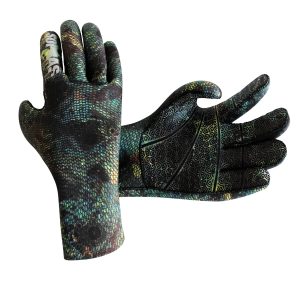
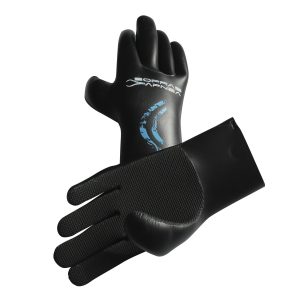
The Freedivers gloves DELFINO are a standard freediving glove in 3mm open cell neoprene, designed for thermal protection and maintained dexterity. The Freedivers camou gloves 3mm use the same construction with a camouflage exterior — the practical choice for spearfishing, where reducing visual contrast across the diver’s whole profile (including hands) contributes to reduced detection by fish at close range. Both models are available in multiple sizes; correct glove sizing is critical for open cell — a loose glove allows water flushing that negates the thermal advantage of the open cell construction.
Socks: 3mm Open Cell, Full Size Range
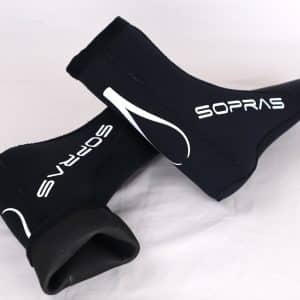
The Socks 3mm open cell are available in six size steps from EU 35/36 through 45/46, covering the full adult size range. At 3mm open cell, they provide substantial thermal protection while remaining thin enough to fit inside freediving fin foot pockets without creating pressure points or restricting blood flow. Socks that are too thick for the fin pocket compress the foot, reduce circulation, and paradoxically make the feet colder — matching sock thickness to fin foot pocket geometry is an important practical consideration.
Open cell socks also provide a degree of abrasion protection at rocky entry and exit points, and reduce blister risk from direct fin contact on longer sessions.
What to Look For
- Correct sizing for open cell: Open cell gloves and socks must fit snugly with no excess material. Any looseness creates a gap where water circulates and the thermal seal breaks. Size down if between sizes.
- Sock thickness vs fin compatibility: 3mm socks suit most freediving fin foot pockets. Thicker socks may not fit without creating pressure that restricts circulation — check your specific fins before sizing up in sock thickness.
- Glove dexterity: 3mm open cell neoprene maintains good finger dexterity for equipment handling. Thicker gloves improve thermal protection at the cost of tactile sensitivity — 3mm is the practical balance for most freediving use.
- Camouflage vs standard: Camouflage exterior for spearfishing; standard black for general freediving and pool training. Construction and thermal performance are identical between the two glove models.
- Wrist and ankle seals: Check that the glove wrist edge and sock ankle edge seal cleanly against your wetsuit cuffs. The overlap between suit and glove/sock is where cold water most commonly enters — a clean seal here is as important as the glove or sock itself.
Maintenance and Care
Rinse gloves and socks thoroughly in fresh water after every session, turning them inside out to flush the open cell interior. Salt and chlorine residue left in the interior degrades the neoprene cell structure over time. Hang to dry fully before storage — never store damp open cell neoprene compressed or folded, as the interior surfaces will bond and tear when separated. Do not tumble dry or machine wash; heat and mechanical agitation both damage open cell neoprene. Repair small tears at finger seams and ankle edges with neoprene contact cement immediately — these are high-flex points that will propagate quickly if unaddressed. Store flat or loosely rolled in a cool, dry location away from direct sunlight and ozone sources.
Frequently Asked Questions
At what water temperature do I need freediving gloves?
Most freedivers find 3mm neoprene gloves necessary below around 18–20°C for sessions longer than 30–45 minutes. At 15°C and below, gloves are effectively mandatory for any meaningful session — finger dexterity degrades rapidly in cold water and becomes a safety issue. In warmer water, some freedivers use thin 1.5–2mm gloves primarily for abrasion protection rather than thermal insulation. Individual cold tolerance varies considerably, so these are guidelines rather than thresholds.
Do I need freediving socks if my wetsuit has integrated boots?
If your wetsuit includes integrated boots that cover the full foot and ankle, separate socks are generally not needed for thermal protection. Separate open cell socks are most useful when wearing a two-piece wetsuit without integrated foot coverage, or when using freediving fins whose foot pockets cause friction or pressure on bare feet. They are also the correct solution if your wetsuit ankle seals are worn and allow water entry — though in that case the underlying seal issue should also be addressed.
Will 3mm socks fit inside my freediving fins?
3mm socks fit inside the foot pockets of most freediving fins without significant compression. Long-blade freediving fins typically have more generous foot pockets than shorter recreational fins, so compatibility is rarely an issue with dedicated freediving equipment. If you are using fins with a tighter foot pocket or have ordered fins sized for bare feet, try the sock and fin combination before committing to a training session — a sock that compresses the foot pocket reduces circulation and will make your feet colder, not warmer.
Can I use scuba diving gloves for freediving?
Standard scuba gloves work for thermal protection but are generally not optimal for freediving. Scuba gloves are typically thicker (5mm+), reduce finger dexterity significantly, and use closed cell or lined construction that is less thermally efficient than open cell at equivalent thickness. For freediving, where dexterity for equipment handling and fin efficiency matter, 3mm open cell gloves provide a better balance. Thin scuba gloves at 2–3mm are more comparable, but purpose-built freediving gloves in open cell construction are the preferred choice.
How do I put on open cell gloves without tearing them?
The method is the same as for an open cell wetsuit: wet both the glove interior and your hands with a lubricating solution (water with a small amount of conditioner or baby shampoo) before donning. Work each finger in carefully rather than forcing the hand in all at once. Never pull open cell neoprene by gripping the material itself — use the cuff edge and work gradually. Once on, run a small amount of the lubricating solution around the wrist seal to ensure it sits flat against the wetsuit cuff without folding. With practice, donning open cell gloves takes under a minute per hand.