

Showing all 11 results
Freediving gear takes up space, gets wet, and needs to survive repeated transport between home, car, and water. A bag designed for the purpose — with proper drainage, durable materials, and the right dimensions for fins, suits, and masks — is a practical investment that protects expensive equipment and makes every session easier to organise.
More bags can be found here.
Choosing the Right Bag for Your Gear
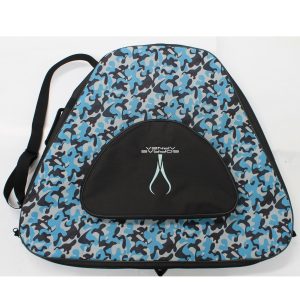
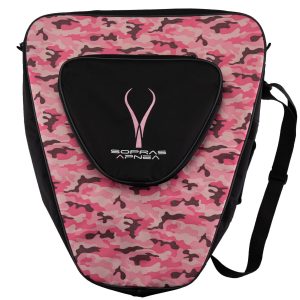
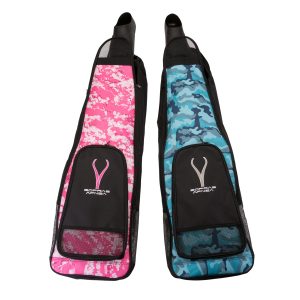
The range here covers several distinct bag types, each suited to different needs. Dedicated monofin bags solve a specific problem: a monofin blade is large, rigid, and fragile — particularly carbon fibre blades — and does not fit in a standard sports bag without risk of damage. The Bag for large monofin and Bag for small monofin are dimensioned specifically for monofin geometry, with padding and structure that protects the blade during transport.
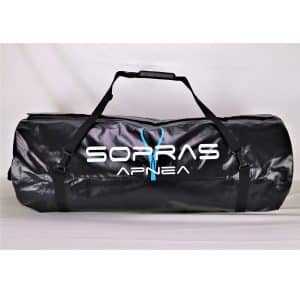
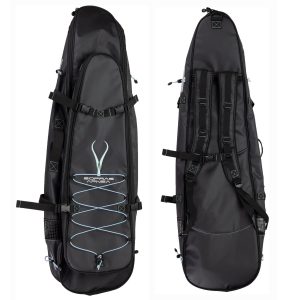
The Freedivers bag and its DeLux variants are the core freediving holdall. These are large, open bags designed to fit a full freediving kit — suit, fins, mask, buoy, and accessories — all at once, while wet. The DeLux versions add features and construction quality appropriate for regular use, with an XLarge variant suited to divers carrying extensive equipment or a second suit.
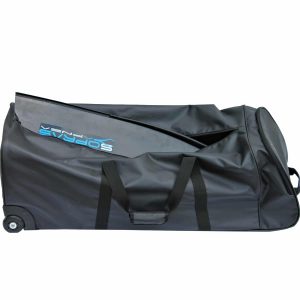
The Trolley bag for freedivers is the travel option — a wheeled bag designed to be checked in as airline luggage while protecting a full freediving kit. Long freediving fins, in particular, complicate airline travel; a purpose-built trolley bag resolves this and keeps the kit organised through airport handling.
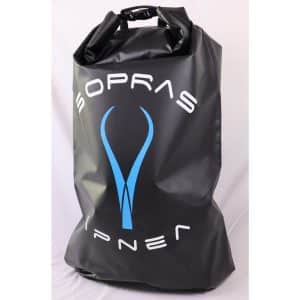
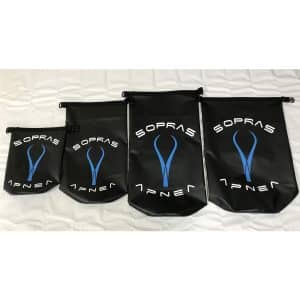
Dry bags — the Big dry bag, Dry back pack, and Waterproof bag cylinder — serve a different function. These are waterproof containers for items that must stay dry: phone, keys, wallet, dry clothing, camera. The dry back pack is backpack-format for hands-free carry; the cylinder waterproof bag is compact and suitable for day-use valuables; the big dry bag handles larger volumes like a dry change of clothes for a full day session.
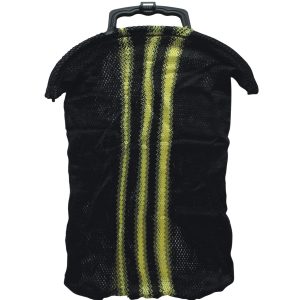
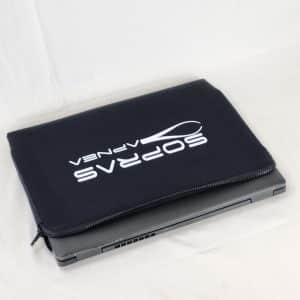
The Net for fish and shells is a mesh carry bag for spearfishing catch, attached to the diver or buoy. The Notebook neoprene protector is a neoprene sleeve for a notebook or tablet — relevant for dive coaches, instructors, or divers who log sessions and want to keep their records protected at the water’s edge.
Materials and Construction
Freediving bags work in a harsh environment. Salt water, UV, sand, and the weight of wet neoprene combine to stress zips, seams, and fabric in ways that standard sports bags are not designed for. Look for bags built with reinforced handles and carry points, since these fail first under repeated heavy loads. Drainage ports or mesh panels allow water to exit a bag loaded with wet gear rather than pooling — a closed bag full of wet neoprene develops mould and odour quickly. Materials should be UV-stabilised and salt-resistant.
For dry bags, the waterproofing mechanism matters: roll-top closures provide reliable waterproofing without zips, which can leak under immersion. Zip-closure dry bags are more convenient but require a quality waterproof zip and regular maintenance of the seal.
What to Look For
- Correct dimensions for your fins. Standard bi-fins up to approximately 80 cm fit in most large freediving bags; longer fins and monofins require specific bags. Measure your fins before buying and confirm the bag’s internal length.
- Drainage for wet gear. Any bag that will regularly carry wet suits and fins should have mesh panels or drainage holes. A fully enclosed bag with wet neoprene inside traps moisture and encourages mould growth even in a single transit.
- Separate wet and dry compartments. Some bags include a separate waterproof pouch for valuables, eliminating the need to carry a separate dry bag for phone and keys — a genuine convenience on full-day sessions.
- Trolley bag dimensions vs. airline restrictions. If you travel with freediving gear, check your airline’s checked luggage weight and size limits before buying a trolley bag. The restriction that catches freedivers is usually the length limit for oversized items, which applies to long fin bags.
- Handle strength for loaded carry. A full freediving bag can easily exceed 15 kg. Handles and shoulder straps need reinforced stitching and wide webbing to be comfortable and reliable under that load.
Maintenance and Care
Rinse all bags with fresh water after saltwater sessions and allow to dry fully before storage — particularly inside, where wet neoprene tends to leave a residue. Leave bags open during drying; zipped shut while damp accelerates mould growth.
Zip maintenance is the most common failure point on diving bags. Rinse zips thoroughly to remove salt, then apply zip lubricant or light silicone grease periodically. A zip that operates stiffly is close to failing — address it before it jams or splits.
For dry bags with roll-top closures, inspect the fold zone regularly for cracking or delamination. The repeated fold-and-seal cycle eventually fatigues the material at the closure point. Store the bag loosely rolled rather than tightly compressed when not in use.
Monofin bags should be checked at the blade contact points — padded areas that bear the weight of the blade during transport. If padding compresses permanently, the protection it provides is reduced. Replace or add padding before carbon blades come into direct contact with rigid bag structure.
FAQ
Will standard bi-fins fit in the Freedivers bag?
Most standard bi-fins up to approximately 80–85 cm total length fit in the main Freedivers bag and DeLux variants. Extra-long training fins and competition fins may not fit flat and typically require a dedicated fin bag or the XLarge variant. Check your fin length before purchasing if you are between sizes.
Is the trolley bag carry-on or checked luggage?
The freediving trolley bag is designed for checked luggage. The dimensions required to fit full freediving fins place it well outside carry-on size limits for any airline. When flying with freediving gear, check your airline’s specific oversized bag policy — some charge extra for bags exceeding standard dimensions regardless of weight.
Do I need a monofin bag if I already have a large bag?
For plastic or fibreglass monofins, a large general bag may be adequate if the fin fits without bending. For carbon fibre blades, a dedicated monofin bag is worth it: carbon blades can delaminate or crack if subjected to point loads from other equipment pressing against them during transport.
What size waterproof bag do I need?
The smallest cylinder bag handles a phone, keys, and a card comfortably. The larger sizes accommodate a change of clothes or a small camera system. The dry backpack is the right choice if you need to keep a significant amount of kit dry and want hands-free carry — particularly useful when walking to remote dive sites or travelling by boat.
Can I use the net bag for accessories as well as catch?
Yes. The mesh net bag works well anywhere you need ventilated carry — wet gloves and socks airing between dives, shells collected during a session, or small accessories like a mask and snorkel you want to access quickly. It is not a structured bag and does not protect fragile items, but for anything that benefits from airflow and quick access it works well.