

Showing all 2 results
Neoprene glue is not optional kit for any serious freediver — it is essential maintenance equipment. Open cell wetsuits tear. The question is whether you repair the tear immediately and cleanly, or let it propagate until it requires a major patch or makes the suit unusable. A tube of neoprene contact cement weighs almost nothing and costs far less than the repair job it prevents.

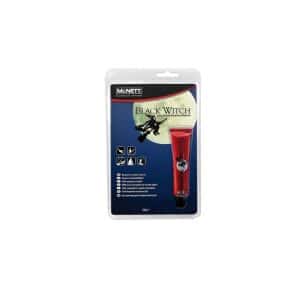
Why Neoprene Glue Belongs in Every Freediver’s Kit Bag
Open cell neoprene is the best thermal material available for freediving suits — and it is also the most vulnerable to tearing. The unlined rubber surface that creates the thermal seal has no fabric structure to arrest a tear once it starts. Small nicks at wrist seals, ankle cuffs, and hood edges are essentially inevitable with regular use, particularly during donning and doffing. Left unrepaired, these small tears propagate under the tension of repeated stretching until what started as a 1cm nick becomes a 10cm split requiring a full neoprene patch.
Neoprene contact cement is specifically formulated to bond to the rubber surface of neoprene and cure to a flexible, elastic state that moves with the suit rather than cracking under stress. Standard general-purpose adhesives — superglue, epoxy, silicone sealant — do not achieve this and will either fail to bond, crack on the first flex, or delaminate after water exposure. The correct adhesive makes a repair that is effectively invisible and structurally permanent; the wrong one makes a repair that fails on the first dive.
How Neoprene Contact Cement Works
Neoprene glue is a contact cement, which means both surfaces to be bonded must be coated and allowed to partially cure before being pressed together. The standard process is: clean both surfaces of any contamination, apply a thin coat to both sides, allow to become tacky (typically 5–10 minutes), apply a second thin coat to both sides, wait a further 5 minutes, then carefully align and press the surfaces together with firm pressure. Contact cement bonds immediately and permanently on contact — repositioning is not possible once the surfaces touch. Curing to full strength typically takes several hours, with most products reaching functional bond strength within 20–30 minutes.
For open cell interior surfaces, the cement bonds well to the exposed rubber. For exterior repairs involving smooth skin or glide skin, the same approach applies. For repairs that involve a fabric-lined exterior surface bonded to neoprene (such as patching a torn smooth skin area with a piece of lined neoprene), the cement bonds less strongly to the fabric side and may benefit from a slightly heavier application or a longer cure time before use.
Patch Repairs vs Seam Repairs
Not all neoprene repairs are the same. A clean tear through the neoprene — where both edges are intact and can be pressed back together — is a straightforward seam repair using contact cement alone. A tear where material has been lost, or where the edges cannot be cleanly aligned, requires a neoprene patch: a piece of thin neoprene (typically 1–1.5mm) cut slightly larger than the damage and glued over the affected area. Patches can be applied to the interior, exterior, or both sides of the suit depending on the location and severity of the damage. For smooth skin suits, a patch on the interior is preferable as it does not disrupt the exterior surface profile.
What to Look For
- Neoprene-specific formulation: Use cement specifically formulated for neoprene. General contact cements may bond initially but often fail to maintain flexibility under repeated flexing and water exposure.
- Flexibility when cured: The cured adhesive must remain elastic — it will be subjected to the same stretching forces as the neoprene it is bonding. A cement that cures rigid will crack and delaminate quickly.
- Cure time vs working time: Faster-curing products are convenient for field repairs but leave less margin for alignment. For precise repairs, a slightly longer working time is preferable.
- Packaging: Small tubes are more practical than large cans for most freedivers — neoprene glue cures from atmospheric moisture once opened, so minimising headspace in the container preserves the unused portion. Store with the lid tightly closed, ideally in a sealed bag.
- Quantity: A small tube covers many standard repairs. Over-purchasing is wasteful given the shelf life limitations once opened.
Maintenance and Care
Neoprene contact cement cures from moisture in the air — once opened, the clock is ticking on the unused portion. Keep the cap tightly closed immediately after use and minimise the time the container is open during application. Storing a tightly sealed tube or can in a zip-lock freezer bag in the freezer significantly extends shelf life between uses. Check the consistency before each repair session: cement that has thickened or begun to cure in the container will not spread or bond correctly and should be replaced. Do not attempt to thin aged cement with solvent — the result is an unpredictable bond that may appear to hold initially but fails under diving conditions. Keep a spare tube in your kit bag for field repairs; a split seam discovered at the dive site is not the time to discover the tube at home has cured solid.
Frequently Asked Questions
Can I use superglue to repair a wetsuit in an emergency?
Superglue (cyanoacrylate) will bond neoprene surfaces but cures rigid — it has no flexibility once set. Under the repeated stretching of a wetsuit in use, a superglue repair will crack and delaminate, often within a single session. It is a last-resort field fix only, useful to hold a tear closed for a single day’s diving until proper neoprene cement can be applied. If you use superglue as an emergency repair, clean the area and apply neoprene cement as soon as possible — the superglue residue will need to be carefully removed first, as it will prevent the contact cement from bonding correctly to the underlying neoprene.
How long should I wait before diving after a neoprene glue repair?
Most neoprene contact cements reach functional bond strength within 20–30 minutes and are fully cured within a few hours. For a small seam repair on a non-structural area, 30 minutes is typically sufficient before light use. For a repair at a high-stress point — wrist seal, ankle cuff, hood face seal — allow a minimum of 2–3 hours, ideally overnight, before diving. Rushing a repair on a high-flex area is the most common cause of repair failure. The bond strength continues to increase for up to 24 hours after initial set.
Can neoprene glue repair a torn smooth skin exterior?
Yes, and it is the correct repair method for smooth skin tears. Clean the tear edges of any contamination, apply two thin coats of contact cement to both surfaces with a 5–10 minute interval, align carefully, and press together firmly. For smooth skin, alignment is especially important as the repair will be visible on the suit exterior — take time to ensure the edges meet cleanly before the surfaces make contact. For wider tears where edges cannot be cleanly apposed, a patch of thin neoprene applied to the interior surface is more effective than trying to force a wide gap together.
How do I stop my open cell suit from sticking to itself in storage?
Store the suit fully dry and unfolded — hanging on a wide hanger with the interior surface not in contact with itself. If storage space requires folding, place a clean cloth or thin plastic sheet between open cell surfaces before folding to prevent contact. A suit that has been stored with interior surfaces in contact and bonded can often be carefully separated by working slowly from one edge with a thin, blunt object — but tearing is a real risk. Applying a very light dusting of talc to the interior before storage is a traditional method that prevents bonding, though it requires thorough rinsing before the next session.
Is one coat of neoprene glue enough, or do I always need two?
Two thin coats on each surface is the standard method and produces a significantly stronger bond than a single coat. The first coat penetrates the neoprene surface and creates a foundation layer; the second coat provides the active bonding surface. A single heavy coat is not equivalent to two thin coats — it takes longer to cure to the correct tack level and often produces an uneven bond. For small field repairs where time is limited, a single coat will hold, but for any repair on a structural area or high-flex point, the two-coat process is worth the additional 10 minutes.