

Showing all 6 results
An open cell wetsuit only performs as well as it fits. Standard sizes cover most body shapes adequately — but for freedivers whose proportions fall outside the norm, or who simply want a suit that seals and moves exactly as intended, a made-to-measure suit is the right solution. Custom-fitted open cell neoprene performs differently to a stock suit in ways that are immediately noticeable in the water.
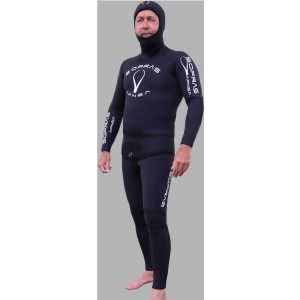
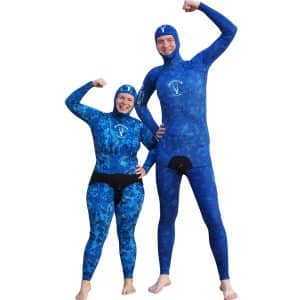
Why Fit Is Non-Negotiable in Open Cell Freediving Suits
The thermal mechanism of an open cell wetsuit depends entirely on contact. The unlined interior adheres to skin and forms a seal — a seal that only holds where neoprene and skin are actually touching. Any excess material creates a gap where water circulates, undermining the thermal advantage that makes open cell construction worth the added care and cost. In a correctly fitted suit, this seal is consistent from neck to wrists to ankles. In a suit that does not fit well, cold water enters and flushes continuously through the gap areas, and the suit behaves more like a loose lined suit than a true open cell one.
Standard sizes are engineered for average body proportions. If your measurements fall cleanly within a standard size chart, a stock suit will fit well. Made-to-measure suits exist for freedivers whose proportions — long arms, short torso, wide shoulders relative to waist, unusual height-to-weight ratios — mean that standard sizing involves consistent compromises. A custom suit eliminates those compromises at the cost of longer lead time and higher price.
What the Measurement Process Covers
A proper custom suit measurement set typically includes 10–15 body measurements taken at rest: chest, waist, hips, shoulder width, arm length, inseam, neck circumference, wrist and ankle circumferences, and total height. Some makers also request measurements in a slightly extended position to account for how the body elongates during a streamlined dive position. The more complete the measurement set, the more precisely the panels can be cut to fit the diver’s specific proportions rather than adjusted from a standard template.
Beyond raw measurements, custom orders typically allow selection of neoprene type, thickness, exterior finish (smooth skin, glide skin, mesh skin, or lined), and seam construction. This makes a custom order not just a fit solution but a complete suit specification tailored to the diver’s water temperatures, dive style, and durability requirements.
Lead Times and Practical Considerations
Custom suits are made to order and require production time — typically 3–8 weeks depending on the maker’s current capacity. Planning ahead is essential; ordering a custom suit the week before a diving trip is rarely feasible. Some makers also offer a fitting confirmation process where the diver reviews the measurement set before production begins, reducing the risk of errors in the final suit. For freedivers purchasing a first custom suit, it is worth discussing expected shrinkage of the neoprene over the first few months of use, as new open cell neoprene stretches and settles slightly with wear.
What to Look For
- Measurement completeness: A maker requesting only 4–5 measurements is working from a modified standard template, not a true custom pattern. Full custom requires at minimum 10 distinct body measurements.
- Neoprene specification: Confirm which neoprene grade is used and whether options exist. Higher-grade rubber (Yamamoto 39, 45) is softer and warmer but less durable — specify based on your priorities.
- Exterior and interior options: A custom order should allow independent specification of interior (open cell, lined) and exterior (smooth skin, glide skin, mesh skin) treatments.
- Seam construction: Glued and blind-stitched seams are standard for quality open cell suits. Confirm this is included, not an upgrade option.
- Revision policy: Understand what happens if the fit is not correct on delivery. Reputable custom suit makers typically offer adjustment or remake options within a defined window.
- Lead time realism: Factor production time into your dive planning. 4–6 weeks is common; peak periods may run longer.
Maintenance and Care
Custom open cell suits require identical care to standard open cell suits — the investment in a bespoke fit makes proper maintenance even more worthwhile. Rinse in fresh water after every session, inside and out. Hang to dry on a wide hanger in shade; never fold a wet open cell suit for storage. The interior surface will stick to itself when compressed and tear on separation. Repair small tears immediately with neoprene contact cement — custom suits use the same repair approach as stock suits, and a clean early repair is always more effective than a larger patch repair later. Store in a cool, dry location away from sunlight, ozone sources (electric motors, UV lamps), and any materials that could bond to or abrade the neoprene surface. With proper care, a quality custom open cell suit should provide 3–5 years of regular use before thermal performance noticeably declines.
Frequently Asked Questions
How do I know if I need a custom suit rather than a standard size?
Check your measurements against the maker’s size chart and note where they fall. If your key measurements — chest, waist, shoulder width, arm length — all sit cleanly within one size, a standard suit will likely fit well. If two or more key measurements fall into different sizes, or if your proportions are unusual (very long arms, short torso, wide hips relative to waist), a standard suit will require compromises that a custom suit eliminates. Freedivers who have experienced consistent cold water entry at specific points — neck, wrists, ankles — in correctly sized stock suits are good candidates for custom fitting.
Can I specify the neoprene thickness differently for jacket and trousers?
Yes, and this is a legitimate approach. The torso retains heat more efficiently than the extremities but also benefits most from reduced bulk at depth. Some freedivers specify a thicker jacket (5mm) with slightly thinner trousers (3mm) to balance core warmth against leg flexibility, or vice versa depending on their cold tolerance pattern. Discuss this specifically with the suit maker — a good custom maker will advise based on your water temperatures and dive profile rather than just producing whatever combination is requested.
How long does it take to receive a made-to-measure suit?
Production time typically runs 3–8 weeks from order confirmation and measurement approval. Some makers have longer lead times during peak season (late spring and summer) when demand is highest. Add shipping time on top of production — for international orders, 1–2 weeks additional is realistic. Plan the order 6–10 weeks before you need the suit to have comfortable margin. If you are ordering for a specific trip or competition, communicate this to the maker at the time of order.
Is a custom suit worth the additional cost for a beginner freediver?
For most beginners, a well-fitting standard size suit is the more sensible starting point. Custom suits make the most sense when the diver knows their body proportions fall outside standard sizing, when they have a clear specification in mind (specific neoprene grade, exterior finish, panel layout), and when they are committed enough to the sport to justify the investment. A beginner who is still developing preferences and diving regularly enough to form an opinion on suit feel is generally better served by a quality standard suit initially, with a custom suit as a considered second purchase.
What measurements do I need to take, and how do I take them accurately?
Standard measurement sets for custom freediving suits include: height, weight, chest circumference (at the widest point), waist, hips, shoulder width (seam to seam across the back), arm length (shoulder seam to wrist), inseam, neck circumference, and wrist and ankle circumferences. Measurements should be taken with a flexible tape measure against bare skin, not over clothing. Take chest and waist measurements while breathing normally — not at maximum inhale or exhale. If possible, have a second person take the measurements rather than measuring yourself, as self-measurement of back and shoulder dimensions is rarely accurate. The suit maker’s specific measurement guide takes precedence over generic instructions.