

Showing all 11 results
A freediving mask has one job above all others: seal reliably against your face and stay that way through pressure changes at depth. Everything else — internal volume, lens clarity, silicone quality, frame construction — matters only after that seal is guaranteed. This selection covers the full range from low-volume competition masks to everyday open-water and spearfishing options, including both traditional two-lens masks and minimal-volume freediving goggles.
Why Freediving Masks Differ from Scuba Masks
The single most important difference between a freediving mask and a standard scuba mask is internal volume. Every time a freediver descends, the air space inside the mask compresses with increasing pressure — and must be equalised by exhaling a small amount of air through the nose into the mask. A large-volume mask requires significantly more air to equalise at depth, which means more oxygen consumed on every dive. For recreational freedivers this is a minor concern; for divers pushing depth or bottom time, minimising mask volume directly extends dive performance.
Beyond volume, freediving masks are designed with liquid silicone skirts rather than the harder silicone used in many scuba masks. Liquid silicone adapts more precisely to facial contours, creating a more reliable seal under the pressure variations of a freedive. The frame and lens geometry in purpose-built freediving masks also tends to be lower-profile, keeping the mask close to the face to reduce drag during the descent.
Mask Types: Traditional Two-Lens vs Freediving Goggles
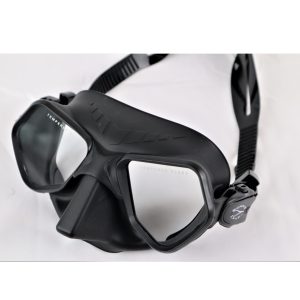
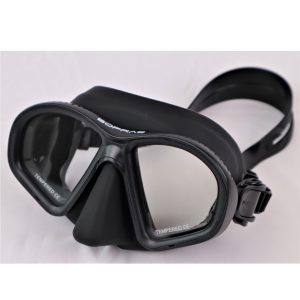
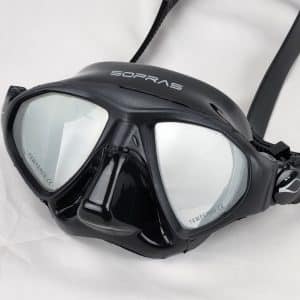
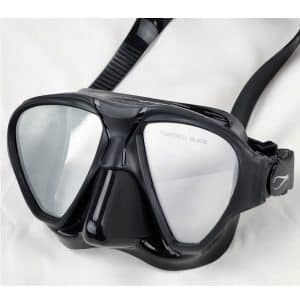
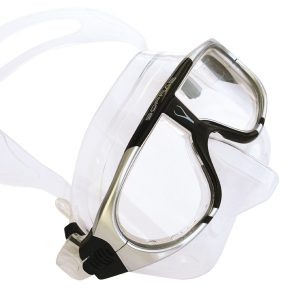
The range includes two distinct mask types. Traditional two-lens masks — such as the Barracuda, Chiara, Carina, Phantom, and Murena II — use a standard nose pocket and silicone skirt construction, allowing nose equalisation at depth and providing a wider field of view. These suit most freedivers from recreational to advanced, and are the appropriate choice for anyone learning to dive or planning to reach depths where mask equalisation is required.
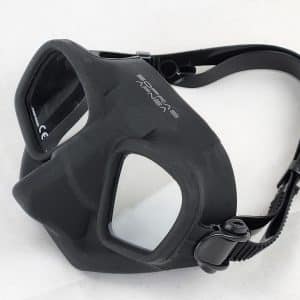
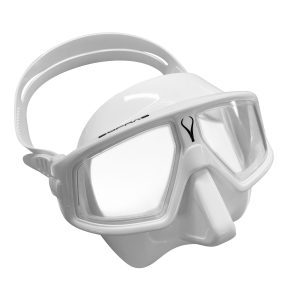
Freediving goggles — the Sferica and Sferica II models — use a two-glass minimal-volume design with no nose pocket. Internal volume is extremely low, making equalisation almost effortless. The trade-off is that they cannot be nose-equalised in the traditional sense at significant depth, which limits their practical use to shallow pool freediving, dynamic apnea, and experienced divers who have mastered the technique of equalising without a nose pocket. For pool training and static apnea, the reduced volume and clean profile are clear advantages.
Frame Materials and Silicone Quality
Masks in this range use PC (polycarbonate) frames paired with liquid silicone skirts and straps. Polycarbonate provides the necessary rigidity to maintain lens geometry and seal integrity under pressure, while remaining lighter than the metal frames used in some technical masks. The liquid silicone skirt is the critical sealing component — it should feel soft and pliable, conforming to the face without requiring pressure from the strap to maintain contact. A strap that has to be over-tightened to achieve a seal is compensating for a poor skirt fit, which will eventually lead to leaking as the silicone fatigues.
All masks in this category use tempered glass lenses. Tempered glass is significantly more impact-resistant than standard glass and, critically, shatters into small blunt fragments rather than sharp shards in the event of breakage — a safety requirement for any mask used in water. Optical quality in tempered glass masks at this price range is consistent; distortion at the lens periphery is normal and not a defect.
Camouflage Masks for Spearfishing
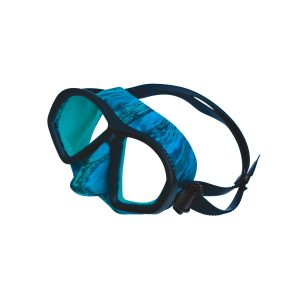
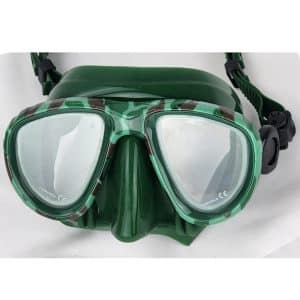
The Barracuda Camouflage and Murena II Mimetic offer camouflage-patterned frames and skirts for spearfishing use. The reduced visual contrast of a camo mask against the diver’s face can marginally reduce detection by fish at close range — particularly relevant for shallow-water spearfishing where the diver’s face is visible to prey. The functional mask construction is identical to the standard versions; the camouflage finish is the differentiating factor.
What to Look For
- Skirt fit first: No mask suits every face. The critical test is to press the mask against your face without using the strap — it should hold briefly from suction alone. If it does not seal without the strap, it will not seal reliably with it.
- Internal volume: Lower volume means less air needed for equalisation at depth. Traditional masks vary; freediving goggles (Sferica series) minimise volume maximally but require specific equalisation technique.
- Silicone colour: Clear silicone skirts provide a wider apparent field of vision and less claustrophobic feel for some divers. Black silicone eliminates peripheral light scatter — preferred by some in bright conditions. Both seal equally well; choice is personal preference.
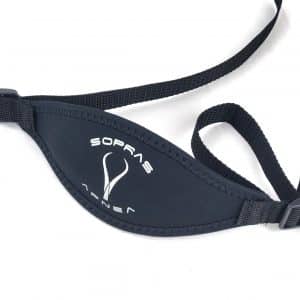
- Strap type: The standard silicone strap is adequate for most use. A neoprene mask strap replacement (available separately in this range) is more comfortable against bare skin, distributes pressure more evenly, and does not pull hair — particularly useful for open-water and cold-water sessions.
- Lens design: Two-lens masks provide better peripheral vision than single-lens designs. Freediving goggles sacrifice peripheral coverage for volume minimisation — assess which trade-off matches your primary use.
- Purpose: Pool and static apnea favour minimal-volume goggles. Open-water recreational diving, spearfishing, and depth training favour traditional two-lens masks with a reliable nose pocket.
Maintenance and Care
Rinse thoroughly in fresh water after every saltwater or pool session — pay particular attention to the silicone skirt and the area where it meets the frame, where salt and chlorine residue accumulates. Allow to air dry completely before storing; storing a mask damp in a closed bag accelerates silicone degradation. Store in a protective case or mesh bag away from direct sunlight — UV exposure yellows clear silicone skirts over time and reduces their flexibility. Do not leave masks on a car dashboard or in direct sun; heat warps polycarbonate frames and permanently deforms silicone skirts. Before any session, apply a thin coat of defog solution or a drop of baby shampoo to the inner lens surface, rinse briefly, and do not rub dry — this prevents fogging during the dive. New masks with factory coatings on lenses should be defogged aggressively before first use, or the coating will cause persistent fogging underwater.
Frequently Asked Questions
How do I stop my mask from fogging during a dive?
New masks fog due to a factory silicone coating on the inner lens surface. The standard remedy is to scrub the inner lens with toothpaste (non-gel, non-abrasive) in circular motions for a minute per lens, rinse, and repeat several times before first use. For ongoing use, apply a commercial defog solution or a small drop of baby shampoo to a dry inner lens, rub to coat the surface, then rinse briefly with water just before entering. The thin film left behind prevents moisture droplets from forming. Do not dry the lens after applying defog — the residual moisture film is part of how it works.
What is the difference between the Sferica goggles and a standard freediving mask?
The Sferica and Sferica II are minimal-volume freediving goggles with a two-glass design and no nose pocket. Their internal volume is extremely low, making depth equalisation far less air-costly than a traditional mask. The limitation is that they cannot be nose-equalised in the standard way, which restricts their practical use to pool disciplines (dynamic apnea, static) and experienced freedivers who have developed alternative equalisation techniques. For open-water recreational freediving and anyone still developing their equalisation, a standard two-lens mask with a nose pocket is the appropriate choice.
Why does my mask leak even though I’ve tightened the strap?
Over-tightening a mask strap is the most common cause of persistent leaking — not the solution to it. A strap that is too tight deforms the silicone skirt, breaking the seal rather than reinforcing it. If a correctly tensioned strap still leaks, the issue is skirt fit: the mask geometry does not match your facial contours. The solution is to try a different mask model, not to tighten further. Facial hair on the upper lip and sides of the face also prevents a clean seal — this is unavoidable and not a mask defect.
Can I use a freediving mask for scuba diving?
Yes, though with some caveats. The low internal volume of a freediving mask means less effort to equalise on a scuba descent, which is actually an advantage. The main consideration is that freediving masks are generally less robust than dedicated scuba masks — the thinner silicone skirts and lighter frames are optimised for the different demands of freediving rather than repeated multi-hour scuba dives. For occasional crossover use there is no meaningful problem; for regular scuba diving a mask designed for that purpose is more durable over time.
What does a neoprene mask strap do that a silicone strap does not?
A neoprene strap replacement distributes strap pressure across a wider surface area, reducing the concentrated pressure that silicone straps can create against the back of the head during longer sessions. Neoprene also does not snag or pull hair — a practical advantage for divers with longer hair. The soft texture is more comfortable against bare skin than silicone, particularly when worn for extended surface intervals. Neoprene straps do not provide better seal than the original silicone strap; the improvement is entirely in comfort and wearability.