


Showing all 9 results
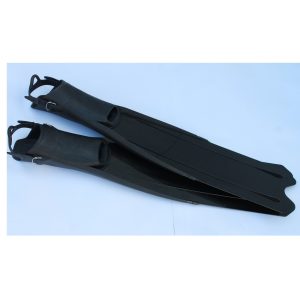
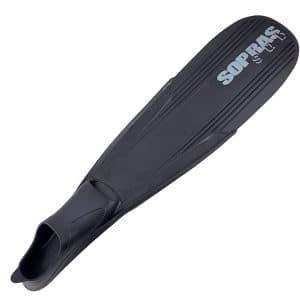
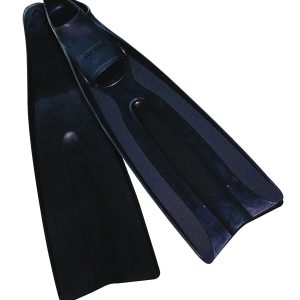
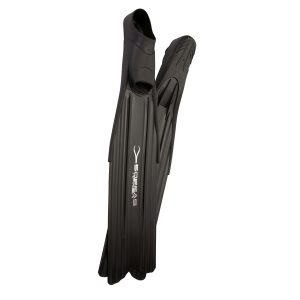
One-piece fins are the practical, accessible heart of the freediving fin range. Blade and foot pocket are moulded as a single unit — simpler, more affordable, and with no joint to loosen or maintain. For recreational divers, those starting out, and anyone who values a fin that just works without fuss, a one-piece fin delivers proper long-blade propulsion at the lowest entry point. This category spans the X-Race line in several colours and a more flexible version, the Lunga stealth, the strap-fitted Long fins with strap, and the durable Rubber full foot fins.
What “One-Piece” Means and Who It Suits
A one-piece fin has its blade and foot pocket moulded as a single component, rather than joined by a rail-and-screw fixing like a detachable fin. This has clear advantages: there is no fixing to loosen, work free, or maintain; power transfers directly from foot pocket to blade with no joint losses; and the fin costs less because it is simpler to produce. The trade-off is that the blade cannot be swapped or replaced independently — if the blade is damaged or you outgrow its stiffness, the whole fin is replaced rather than just the blade.
For most recreational and beginner freedivers, that trade-off is the right one. A one-piece fin delivers the long-blade propulsion that defines a freediving fin, at the most accessible price, with the simplicity and durability that suit divers who are not yet specialising. If you are learning, diving casually, or want a reliable fin without the cost or complexity of a composite or detachable system, a one-piece fin is the sensible choice.
The X-Race Line and the Rest of the Range
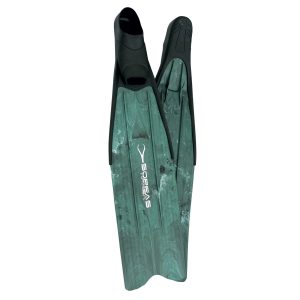
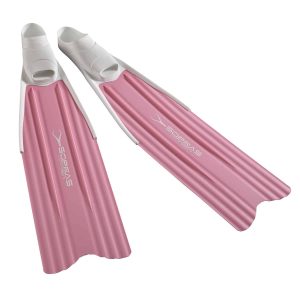
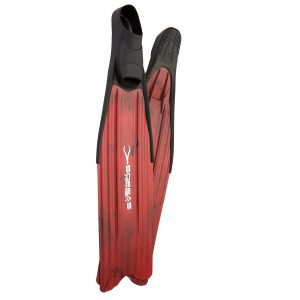
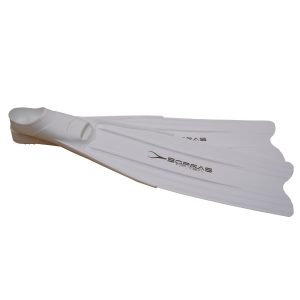
The X-Race is the workhorse one-piece freediving fin — a balanced blade suited to recreational diving and training, available in black and green. A separate more flexible version is offered in several colours (pink, red, and white alongside the standard), with a softer blade for divers who want an easier, lighter kick. Across the line the colours are cosmetic — the performance difference is between the standard and the more flexible blade, not between the colours.
The Lunga stealth is a long-bladed one-piece fin in a discreet dark finish, offering extended-blade propulsion at an accessible price. The Long fins with strap use an adjustable strap and open-heel foot pocket rather than a closed full-foot pocket — a different fit approach covered below. The Rubber full foot fins are a durable, versatile full-foot option, well suited to travel, snorkelling crossover, and divers who want a simple, robust fin that tolerates varied use.
Full-Foot vs. Strap (Open-Heel) Fins
Most freediving fins use a full-foot pocket: a closed pocket that encloses the foot, worn over a neoprene sock, sized to fit snugly. It transfers power efficiently and is the standard for dedicated freediving. The Long fins with strap instead use an open-heel pocket with an adjustable strap. This accommodates a wider range of foot sizes and thicker socks or booties, adjusts to fit, and is more forgiving if your foot size sits between standard sizes — useful for cold-water sock layering, for divers between sizes, or where fins may be shared.
The trade-off is that a strap fin transfers power slightly less directly than a well-fitted full-foot pocket, and the strap is an additional component to maintain. For dedicated performance freediving, a snug full-foot pocket is generally preferred; for versatility, adjustability, and use over thicker thermal socks, the strap approach has real practical merit.
Blade Stiffness and the “More Flexible” Option
As with any freediving blade, stiffness should match the diver — body weight, leg strength, and how the fin will be used. The standard X-Race blade suits the broad middle of recreational divers. The X-Race more flexible version uses a softer blade, which benefits lighter divers, those with developing finning technique, and anyone who finds a stiffer blade tiring over a session. A softer blade flexes more readily under a lighter or less powerful kick, returning energy at a cadence those divers can sustain comfortably.
The principle is the same as for composite blades: a blade too stiff for the diver wastes effort because it never fully loads, while a blade matched to the diver’s power returns energy efficiently. If you are lighter, newer to finning, or simply prefer an easier kick, the more flexible option is worth considering over the standard blade.
What to Look For
- One-piece for simplicity and value. If you want a reliable fin without the cost or complexity of a detachable or composite system, a one-piece fin is the sensible choice. Accept that the blade cannot be swapped — for recreational and beginner diving, that rarely matters.
- Standard vs. more flexible blade. Match blade stiffness to your weight and strength. Lighter divers, those developing technique, or anyone who finds a stiffer blade tiring should consider the X-Race more flexible; the standard suits the broad middle of recreational divers.
- Full-foot vs. strap fit. A full-foot pocket (most of the range) transfers power efficiently and suits dedicated freediving over a neoprene sock. The strap-fitted Long fins accommodate thicker socks, varied foot sizes, and adjustable fit — useful for cold water or between-size feet.
- Foot pocket fit with your sock. Full-foot freediving fins are worn with a neoprene sock. Size the pocket to fit snugly over the sock thickness you actually dive in — not over a bare foot.
- Colour is cosmetic. Across the X-Race colours, performance is identical — the meaningful difference is standard vs. more flexible blade. Choose colour on preference, or a darker finish like the Lunga stealth if low visibility matters to you.
Maintenance and Care
Rinse fins thoroughly with fresh water after every session, paying attention to the foot pocket interior where salt and sand accumulate. On strap fins, rinse the strap and buckle as well — salt and grit in the buckle mechanism cause it to stick or wear. Dry away from direct sunlight before storage.
Store fins flat or hanging by the foot pocket — never standing on the blade tips or with weight resting on the blades. A one-piece plastic blade stored under sustained load or against a hard edge can take a permanent bend over time, which reduces propulsion efficiency.
Keep fins out of prolonged direct sun and heat. Sustained UV exposure gradually makes plastic brittle, and heat can cause a blade left under load to deform. Do not leave fins in a closed car in direct sun, particularly during summer.
On strap fins, inspect the strap and buckle periodically for wear, cracking, or a buckle that no longer holds securely. The strap is the component most likely to fail first on an open-heel fin; replace it before it lets go in the water rather than after.
Inspect the blade and the blade-to-foot-pocket area for cracks or stress marks. Because a one-piece fin cannot have its blade replaced separately, catching damage early matters — a small crack will propagate under repeated flexing, and on a moulded fin that eventually means replacing the whole fin.
FAQ
Should I choose a one-piece or a detachable fin?
It depends on how you expect your diving to develop. A one-piece fin is simpler, more affordable, and has no fixing to loosen — ideal for recreational and beginner diving where you want a reliable fin without complexity. A detachable fin costs more but lets you replace a damaged blade, swap stiffness as your technique develops, and pack down more compactly. If you are diving casually or starting out, one-piece is the sensible choice; if you expect to specialise and want an upgrade path, detachable is worth the extra.
What is the X-Race “more flexible” version for?
The more flexible X-Race uses a softer blade, suited to lighter divers, those still developing finning technique, and anyone who finds a stiffer blade tiring over a session. A softer blade flexes more readily under a lighter or less powerful kick and returns energy at a cadence those divers can sustain. If you are lighter, newer to freediving, or simply prefer an easier kick, the more flexible version is likely the better match than the standard blade.
What is the difference between full-foot fins and the strap fins?
A full-foot fin (most of this range) has a closed pocket that encloses the foot, worn over a neoprene sock and sized to fit snugly — it transfers power efficiently and is standard for dedicated freediving. The Long fins with strap use an open-heel pocket with an adjustable strap, which accommodates a wider range of foot sizes and thicker socks, and adjusts to fit. Strap fins are more versatile and forgiving of fit; full-foot fins transfer power slightly more directly. Choose based on whether you prioritise efficiency or adjustability.
Do the different colours perform differently?
No — across the X-Race colours, performance is identical. The colour is cosmetic. The meaningful performance difference in the range is between the standard blade and the more flexible blade, not between black, green, pink, red, or white. Choose colour on personal preference, or a discreet dark finish such as the Lunga stealth if low visibility matters to you, for example when spearfishing.
Do I need a neoprene sock with these fins?
For full-foot fins, yes — they are designed to be worn with a thin neoprene sock, which provides fit and thermal protection and prevents chafing and blisters over long sessions. Size the foot pocket to fit snugly over the sock thickness you actually dive in. The strap-fitted Long fins are more accommodating and work well over thicker socks or booties, which is part of their versatility, but a sock is still recommended for comfort and warmth.