


Showing all 5 results
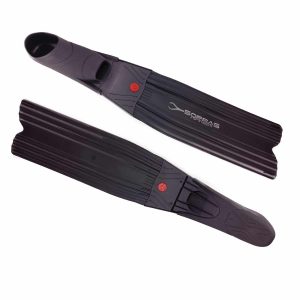
Detachable plastic blades are where freediving begins for most divers — and where a smart upgrade path starts. Plastic delivers usable composite-style propulsion at the most accessible price, with the durability to survive the knocks that newer divers and rough entries inevitably produce. The detachable construction means the foot pocket and blade are separate components: blades can be replaced if damaged, swapped for a different length or stiffness, and packed down compactly for travel. This category covers the HF 100 in three finishes (black, camou, and clear) and the X-Race detachable system, including a short blade option.
Why Start With a Detachable Plastic Fin
A plastic freediving blade is a long, flexible blade in the same family as carbon and fiberglass — far more efficient than a stiff snorkelling fin — but made from a polymer rather than a composite. It does not return energy as crisply as carbon, and it is slightly heavier, but it delivers the long-blade propulsion that defines a freediving fin at a fraction of the cost. For a diver learning finning technique, building leg conditioning, or simply diving on a budget, a plastic blade provides the right propulsion characteristics without the expense or fragility of composite.
Durability is the second advantage, and a real one. Plastic tolerates the point loads, edge contact, and handling knocks that crack a carbon blade. A diver still developing equipment habits — or one regularly entering off rocks, boats, and beaches — gets a fin that survives the learning curve. The performance ceiling is lower than composite, but for most divers in their first few years, that ceiling is well above their actual technique level.
The Detachable Advantage and Upgrade Path
The defining feature of this category is that the blade and foot pocket are separate components, joined by a rail-and-screw or clip fixing rather than moulded as one piece. This has three practical benefits. First, a damaged blade can be replaced on its own without buying a whole new fin. Second, blades can be swapped — for a different length or stiffness as your technique develops, or a short blade for travel and a full blade for open water. Third, the fins pack down more compactly, with blade and pocket separated, which simplifies transport and storage.
For many divers, the most valuable aspect is the upgrade path. Starting with a plastic blade on a quality detachable foot pocket means that when your technique outgrows the plastic, you can change the blade rather than replacing the entire fin. Confirm blade-to-pocket compatibility within the system you choose, but the principle is sound: the foot pocket is the long-term investment, and the blade is the component you evolve over time.
The HF 100 and X-Race Systems
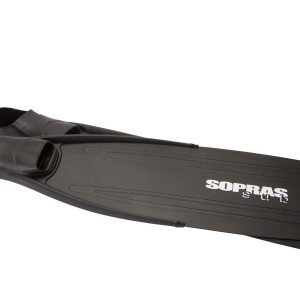
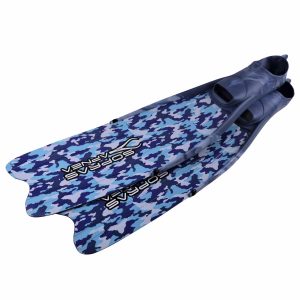
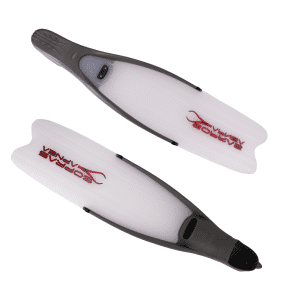
The HF 100 is the standard detachable plastic freediving fin, available in three finishes: black, camou, and clear. The blade and foot pocket performance is consistent across the three — the difference is cosmetic. The camou finish is favoured by spearfishers for whom blade visibility to fish matters; black and clear suit general freediving and training. All three provide the same long-blade propulsion in a detachable, replaceable format.
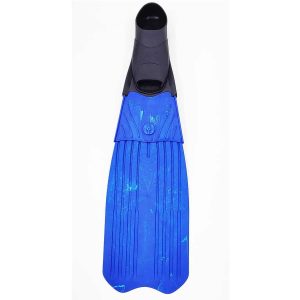
The X-Race detachable is a detachable-blade fin built around an interchangeable system. The Short blade for X-RACE detach is a shorter blade option for the same foot pocket, designed for situations where a full-length blade is impractical: pool training and dynamic apnea, travel where packed length is limited, and confined-space use. Owning the X-Race foot pocket with both a full and a short blade gives a single fin system that adapts from open-water depth diving to pool sessions without buying two complete pairs.
What to Look For
- Plastic for value, durability, and learning. If you are newer to freediving, on a budget, or diving in environments where blades take regular contact, a plastic detachable blade is the sensible starting point. It delivers proper long-blade propulsion while surviving the knocks that would damage composite.
- Detachable system for the upgrade path. The foot pocket is the lasting investment; the blade is replaceable and swappable. Starting on a detachable pocket means you can change blades — length, stiffness, or eventually material — without buying whole new fins.
- Foot pocket fit with your sock. Plastic freediving fins, like composite ones, are worn with a neoprene sock. Size the pocket to fit snugly over the sock thickness you actually dive in — not over a bare foot.
- Full vs. short blade for your use. A full-length blade maximises efficiency for open-water depth and distance. A short blade (the X-Race short option) suits pool training, dynamic apnea, travel, and confined spaces where full blades are impractical. The X-Race system lets you run both on one foot pocket.
- Finish to suit your diving. On the HF 100, the black, camou, and clear finishes perform identically — choose camou if blade visibility to fish matters for spearfishing, otherwise pick on preference.
Maintenance and Care
Rinse fins thoroughly with fresh water after every session, paying attention to the foot pocket interior and the blade-to-pocket fixing where salt and sand accumulate. Sand trapped in the rail or screw fixing of a detachable fin causes wear and can loosen the blade over time. Dry away from direct sunlight before storage.
Store fins flat or hanging by the foot pocket — never standing on the blade tips or with weight resting on the blades. Plastic is more forgiving than composite, but a blade stored under sustained load or against a hard edge can still take a permanent bend over time, which reduces propulsion efficiency.
Check the blade-to-pocket fixing periodically. On detachable systems, the rails, screws, or clips that hold the blade can loosen with repeated flexing and handling. Confirm the fixing is secure before each session — a blade that detaches or shifts mid-dive disrupts your kick and can be lost.
Keep plastic blades out of prolonged direct sun and heat. While plastic is less sensitive than composite resin, sustained UV exposure gradually makes the polymer brittle, and heat can cause a blade left under load to deform. Do not leave fins in a closed car in direct sun.
Inspect the blade for cracks or stress marks, particularly at the foot pocket junction where load concentrates. A cracked plastic blade is inexpensive to replace on a detachable system — one of the practical advantages of detachable construction over a moulded one-piece fin.
FAQ
Is a plastic blade good enough, or should I go straight to carbon?
For most divers in their first few years, a plastic blade is the right choice. It delivers proper long-blade propulsion, survives the contact and handling that would damage carbon, and costs a fraction as much. The efficiency ceiling is lower than composite, but until your finning technique is well developed, that ceiling is above your actual level — meaning a carbon blade would not yet translate into proportionally better diving. Start on plastic, develop technique, and upgrade the blade when you can feel the limitation. The detachable system makes that upgrade straightforward.
Can I later fit a carbon or fiberglass blade to the same foot pocket?
That depends on the compatibility of the specific detachable system. The principle of detachable construction is that the foot pocket is the lasting component and the blade is interchangeable — so an upgrade path exists in many cases. Confirm blade-to-pocket compatibility within the system you choose before assuming a specific composite blade will fit. Even within plastic, the detachable design lets you swap length and stiffness, which is valuable on its own.
What is the difference between the HF 100 black, camou, and clear?
The difference is purely cosmetic — the blade and foot pocket perform identically across all three finishes. The camou version is favoured by spearfishers, where a blade that blends with the environment is less likely to alert fish. Black and clear are popular for general freediving and training. Choose on the basis of your activity and personal preference rather than expecting a performance difference.
What is the short blade for the X-Race for?
The short blade is a shorter blade option for the X-Race detachable foot pocket, designed for situations where a full-length freediving blade is impractical: pool training and dynamic apnea, travel where packed length is restricted, and confined or shallow environments. Because it fits the same X-Race foot pocket as the full blade, you can run one foot pocket with two blade options — a full blade for open-water depth and the short blade for the pool or travel — rather than buying two separate pairs of fins.
Do I need a neoprene sock with plastic freediving fins?
Yes. Like composite freediving fins, plastic ones are designed to be worn with a thin neoprene sock, which provides fit and thermal protection and prevents chafing and blisters over long sessions. Size the foot pocket to fit snugly over the sock thickness you actually dive in. Wearing these fins barefoot results in a loose, inefficient fit that is uncomfortable over any distance.